Rwanda School Trains African Students in Leadership and Governance
The African School of Governance in Kigali, Rwanda is training 48 students from 14 African countries through its Master of Public Administration programme, which combines classroom learning with practical governance experience.
 judithhh
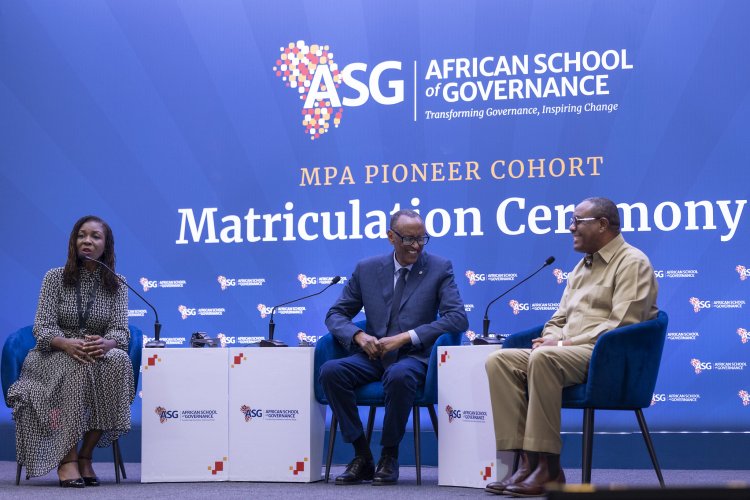
The African School of Governance has announced that 48 students from 14 African countries are currently undergoing advanced leadership and governance training in Rwanda. The initiative is part of a broader effort to strengthen governance systems and develop practical solutions to long-standing development challenges across the continent.
Headquartered in Kigali, the institution is focused on preparing a new generation of public leaders through its flagship Master of Public Administration programme. The programme blends academic coursework with real-world governance experience, aiming to bridge the gap between theory and the practical demands of public service.
A continent-wide cohort of emerging leaders
The current cohort reflects the school’s pan-African outlook, bringing together young professionals and mid-career participants from across the continent. The diversity of the group is intended to encourage cross-country learning and shared understanding of governance challenges that transcend national borders.
One of the students, Tanzanian participant Daniel Naftal Lema, shared that his decision to join the programme stemmed from long-standing questions about why many African development challenges persist despite significant investment.
He explained that growing up in Tanzania exposed him to repeated cycles of policy intervention that often failed to produce lasting change. His motivation, he said, was to better understand these patterns and acquire the skills needed to contribute to more sustainable solutions.
Learning beyond the classroom
A key feature of the programme is its Work Integrated Learning model, which places students in direct engagement with policymakers, governance institutions, and public sector reform initiatives across Africa.
Through these placements and interactions, students observe how policies are developed, negotiated, and implemented in complex political and administrative environments. The approach is designed to ensure that graduates are not only academically trained but also practically prepared for leadership roles in government and related sectors.
The school also notes that its faculty and guest lecturers are drawn from African governments, regional bodies, and international development organizations, offering students first-hand insights into governance realities across different contexts.
Founding vision and institutional goals
The African School of Governance was founded in 2022 by Paul Kagame and Hailemariam Desalegn. Its establishment was driven by the belief that Africa’s development challenges require stronger leadership pipelines and more effective public institutions.
According to Kagame, sustainable progress on the continent depends on institutional strength rather than individual leadership alone. He emphasized that long-term development requires systems that consistently produce capable and accountable leaders.
Access, scholarships, and application window
To broaden access, the programme offers scholarships supported by the Mastercard Foundation. These scholarships are awarded based on both merit and financial need, ensuring that talented candidates from diverse backgrounds can participate.
The institution has also announced that applications for the programme remain open until May 31, 2026, encouraging qualified candidates from across Africa to apply.
Building future governance capacity in Africa
As African countries continue to navigate complex economic, political, and social challenges, initiatives like the African School of Governance reflect a growing emphasis on developing homegrown leadership capacity.
By combining classroom instruction with practical exposure to governance systems, the programme aims to produce leaders equipped not only with knowledge, but also with the practical skills needed to drive reform and improve public service delivery across the continent.