UI Don Outlines Critical Reforms for Nigeria to Reaping Economic Benefits from Global Trade
UI Don Outlines Critical Reforms for Nigeria to Reaping Economic Benefits from Global Trade
 UmarFarouk123
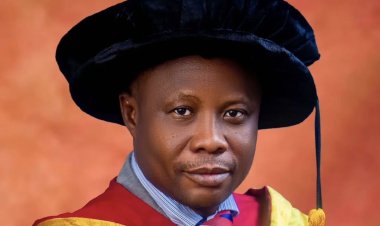
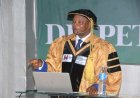
A Professor of International Economics and Regional Integration, Professor Emmanuel Olawale Ogunkola, has identified some issues that needed to be addressed for trade, in general and agricultural trade in particular, to have the desirable effects on the sustainable structural transformation of the Nigerian economy.
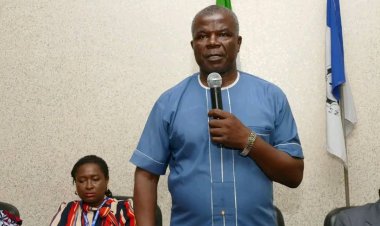
He identified these issues while delivering the 606th Inaugural Lecture of the University of Ibadan on behalf of the Faculty of Economics and Management Sciences.
The title of the lecture was: "Shall We Trade?"
Professor Ogunkola affirmed that Nigeria has embraced trade agreements/arrangements at all possible levels: multilateral, regional/continental, bilateral and even at the unilateral level.
He stated that the evidence of the nation’s commitment to trade can be seen when it became a contracting party to the General Agreement on Tariffs and Trade (GATT) at independence in 1960.
He explained that 34 years later, the country also ratified the Marrakesh Agreement establishing the World Trade Organisation (WTO) and thus became a founding member of the organisation.
The Don said that as a major player in the West African sub-region, Nigeria has signed up to the ECOWAS Common External Tariff (CET) and ECOWAS Trade Liberalization Scheme (ETLS), and at the continental level, Nigeria has signed and ratified the agreement establishing the African Continental Free Trade Area (AfCFTA), and many bilateral agreements with other countries in Africa and across the globe.
Despite these various trade and trade-related documents, agreements and arrangements, the Lecturer noted that Nigeria's trade structure remains virtually unchanged and is yet to achieve the desirable goal of structural transformation through trade.
He observed that Nigeria, like most Developing Countries (DC) and Least Developed Countries (LDC) has not sufficiently benefitted from international trade due to a myriad of challenges to use trading to promote sustainable structural transformation.
Professor Ogunkola explained that in terms of items of trade: goods and services, it is clear that Nigeria has a comparative advantage in agriculture and services, restating that with abundant agricultural resources, the nation has comparative advantage in some agricultural products.
He, however, lamented that the nation is yet to utilise the available opportunities in the new trade order to develop the sector and by extension the economy.
According to him, Nigeria's exports are dominated by raw and unprocessed products, mainly agriculture, crude oil and minerals.
The Inaugural Lecturer disclosed that Nigeria has abundant agricultural resources which are grossly underutilized, because of such challenges as restrictive land tenure system, low rate of returns on agricultural practices, the dominace of simple farm implements and limited adoption of agricultural machinery and mechanisation, rain-fed agricultural practice, and the high risk that the few investors in this sector are exposed to.
Given this, Professor Ogunkola stressed that while it is desirable for Nigeria to pursue the liberalisation of the sector in the ongoing round of negotiations, it should also seek leverage in the use of support services to address structural problems that limit supply response and seek improved market conditions for its agricultural outputs.
He stated that a trade policy is critical for effective trade-induced industrialisation, adding that a national trade policy architecture and the flurry of activities in bilateral, regional and multilateral trade negotiations across the length and breadth of the continent must consistently give priority to industrialisation.
The Don recalled that the establishment of the WTO marked a watershed in the history of the world trading system as it introduced many changes, but stressed that from the inception of the WTO, it was clear that DCs and LDCs would require assistance to effectively engage in the new trading system, and a shift from capacity building to capacity development.
He identified the value chain approach as a means of making agriculture to promote structural transformation in Nigeria, saying that the approach should be adopted with a view to identifying the constraints and challenges, and evolving the critical interventions necessary to optimally develop the sector.
Professor Ogunkola also highlighted that beyond agro-industrialisation which may serve as a first step and lay the foundation for industrial take-off, industrialization through trade is an important strategy worth pursuing at various levels, but more importantly, at the regional/continental level.
The Don said that to have the desirable effects on the sustainable structural transformation of the Nigerian economy for trade in general and agricultural trade in particular, it must be noted that there are many pathways to structural transformation, such as trade and investment, industrialisation, diversification, technological upgrading of which innovation, research and development, and human capital development are important.
The Inaugural Lecture was the third in the series for the 2025/2026 academic session.