"UI is Committed to Deepening its Strategic Partnerships," says DVC
"UI is Committed to Deepening its Strategic Partnerships," says DVC
 UmarFarouk123
The Deputy Vice-Chancellor Research, Innovation, and Strategic Partnerships of the University of Ibadan, Professor Simisola O. Akintola has reiterated that the University of Ibadan is committed to deepening its strategic partnerships in ways that are equitable, reciprocal, and mutually beneficial.
She stated that the University welcomes collaborations that respect the intellectual sovereignty of African scholars and institutions, that invest in the capacity of researchers and graduate students, and that ensure that the knowledge generated on this continent remains accessible to the communities that need it most.
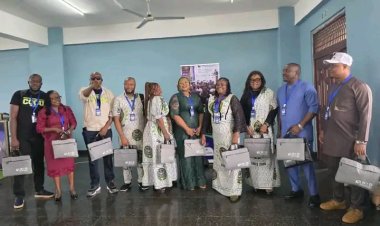
Professor Akintola made these statements at the opening of a one day workshop of the INCITIS Food Project for members of the University community, NGOs, students, farmers, practitioners of aquaponics, hydroponics and insect production, SMEs and entrepreneurs.
The theme of the Workshop was "Urban Food Production: Lessons from INCITIS Food Project" and it was held at the University of Ibadan Living Lab at the Department of Aquaculture and Fisheries Management.
She noted that the gathering was not merely a workshop but a living demonstration of what a great African University must do - reach outwards into its communities, translate knowledge into tangible interventions and build platforms on which science and society can speak to each other in mutual intelligibility.
The DVC restated the Vice-Chancellor's vision that the University of Ibadan must position itself as a globally competitive research University that is simultaneously deeply rooted in the realities and aspirations of Nigeria and Africa.
She said that projects such as the INCITIS Food Project are not peripheral but central to this vision because they demonstrate that our researchers can compete for and execute internationally co-funded, methodologically rigorous, and community relevant research.
Professor Akintola disclosed that stark data has revealed that millions of Nigerians face acute food insecurity in one form or another.
She therefore urged participants to think collectively, interrogate assumptions, share learning across project teams and to make the kinds of mid-course adjustments that will strengthen their impact.

The Principal Investigator of the INCITIS Food Project Living Lab, Dr O. O. Oyebola said the workshop was organised at the instance of the office of the DVC (RISP) to disseminate and showcase the activities of the Living Lab for societal impact.
The UI Director of Audit, Dr. J. O. Oluyori; Head of Department of Aquaculture and Fisheries Management, Professor Flora Olaifa; and Mr Michael Olalekan Adeniyi of Environmental Conflict Mediation and Women Development Initiative delivered goodwill messages at the workshop.
The Integrated and Circular Technologies for Sustainable City Region Food Systems in Africa (INCITIS) is a European Union funded project scheduled to end in 2026. The UI Living Lab which has produced over 200 trainees is one of the 8 such labs in Africa. The Lab provides a technical platform as well as cascade funding for its trainees.