Empowering Girls Through Education Is Key to National Growth — Ogunmuyiwa
Dr Sulaimon Ogunmuyiwa has called for greater investment in girls’ education, stressing that empowering young women through quality education is essential for Nigeria’s development. Speaking at a scholarship event organised by the First Class Muslim Foundation Board in Lagos, he urged parents to prioritise the girl-child and challenged cultural beliefs that limit women’s roles.
 judithhh

The Director-General of the Lagos State Office of Education Quality Assurance, Dr Sulaimon Ogunmuyiwa, has urged parents and stakeholders to prioritise the education of the girl-child, describing it as a critical investment in Nigeria’s future.
Speaking at an event organised by the First Class Muslim Foundation Board in Lagos, Ogunmuyiwa stressed that empowering girls through quality education remains essential for national development, economic growth, and stronger family structures.
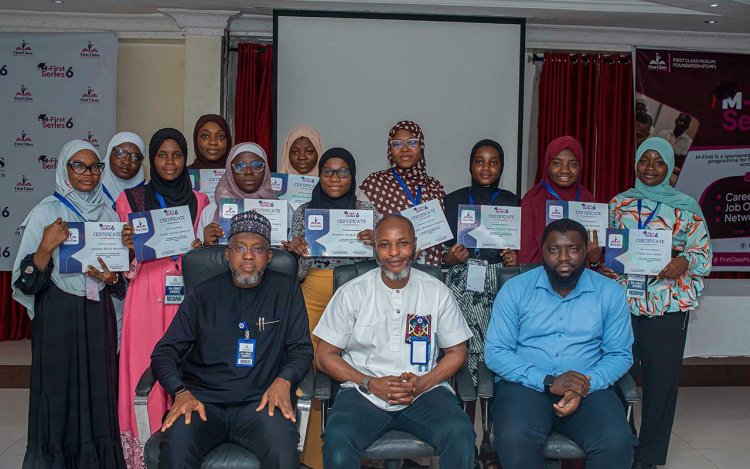
The event celebrated academic excellence among young women, with 20 first-class female graduates from universities across South-West Nigeria receiving scholarships and mentorship support.
According to Ogunmuyiwa, society must move away from outdated beliefs that limit women’s roles and opportunities. “It is the women, or the ladies, or girls that will become mothers. And mothers are the ones who are going to train the children who are going to be the future of this country,” he said.
He explained that educating girls ultimately strengthens the nation because educated women are better equipped to raise future generations and contribute meaningfully to society.
Ogunmuyiwa also cautioned young women against total financial dependence on spouses or relatives, noting that many women from previous generations faced hardship because they lacked economic independence. He encouraged women to pursue education and personal development so they can build sustainable careers and navigate life confidently.
“Everybody is here as an individual, whether male or female, and you should make something out of your life,” he stated.
The education administrator noted that the increasing number of female students graduating with first-class honours reflects a growing determination among young women to achieve financial independence and professional success.
As chairman of the foundation’s Board of Incorporated Trustees, Ogunmuyiwa said the scholarship initiative was designed to bridge the educational gender gap and challenge stereotypes that discourage female education.
He urged parents to abandon biases that restrict girls’ educational aspirations.
“No nation can grow without the girl-child being trained properly. Everybody should be given the opportunity to prove what they can do,” he added.
The scholarship beneficiaries were selected from leading institutions including University of Ibadan, Obafemi Awolowo University, Ladoke Akintola University of Technology, Federal University of Technology Akure, University of Lagos, and Lagos State University.
Other speakers at the event included Dr Ganiyat Tijani-Adenle, Dr Sikirat Akinremi, Dr Azeezat Muse-Sadiq, and Dr Haleemah Olalere.
Some beneficiaries described the scholarship and mentorship initiative as timely and inspiring.
One recipient, Adefunke Adedeji, said the programme reinforced the idea that religion should motivate academic excellence rather than hinder it.
“Religion should not be a barrier to academic excellence. It should be a motivating factor and an encouragement to be outstanding,” she said.
Similarly, Ganeeyat Adeyemi encouraged parents to make education a top priority for their children despite societal challenges.
The conversation around female education and gender inclusion continues to gain momentum in Nigeria amid concerns over school dropout rates, early marriage, and unequal access to education for girls in some regions.
Education advocates and development experts have consistently argued that improving access to quality education for girls is one of the most effective ways to reduce poverty, improve healthcare outcomes, and promote sustainable national development.
As stakeholders continue to push for inclusive educational opportunities, initiatives like the scholarship programme organised by the First Class Muslim Foundation Board highlight the growing recognition that investing in girls’ education is not just a social responsibility but a national necessity.