Fresh Tension in Universities as ASUU Accuses FG of Agreement Violation
ASUU has raised concerns over the Federal Government’s alleged failure to fully implement the 2025 FG-ASUU agreement, warning that the situation could lead to renewed industrial action in Nigerian universities. The union says key welfare, salary, and funding commitments have not been properly fulfilled, This is creating growing frustration among lecturers and heightening tension in the university system.
 judithhh
The Academic Staff Union of Universities (ASUU) has issued a strong warning of a possible nationwide strike, accusing the Federal Government of failing to fully implement the 2025 FG-ASUU Agreement. The union says growing dissatisfaction among lecturers could soon trigger another round of industrial action in Nigerian universities.
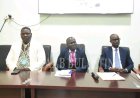
The warning came after ASUU’s National Executive Council (NEC) meeting held at the Modibbo Adama University, where the union reviewed the state of implementation of the agreement signed in December 2025 Over Alleged Government Failure on Agreement Implementation,
ASUU President Prof. Christopher Piwuna said the agreement, which was expected to restore stability in the university system, is being poorly implemented. He warned that frustration among academic staff is increasing due to what the union describes as government negligence on welfare and funding commitments.According to ASUU, the Federal Government has failed to inaugurate the Implementation Monitoring Committee (IMC), which was meant to ensure proper execution of the agreement and prevent bureaucratic delays.
The union also accused both federal and state governments of selective or complete neglect of lecturers’ welfare packages. These include allowances such as; Consolidated Academic Tool Allowance (CATA), Earned Academic Allowance (EAA), Professorial Allowance (PA)
ASUU claimed that some vice-chancellors are only partially implementing payments, while many state-owned universities have ignored the agreement entirely.
The union also raised concerns over unresolved issues such as; Salary arrears (25–35% salary award),Promotion arrears, Salary shortfalls linked to IPPIS, Unremitted deductions, Withheld salaries from the 2022 strike period
ASUU warned that neglecting academic welfare could further destabilize the education system.
Criticism of Government Education Policies
Beyond welfare issues, ASUU criticized several recent education reforms introduced under the Federal Ministry of Education led by Minister Tunji Alausa.
The union rejected the proposed Transnational Education (TNE) arrangement involving foreign institutions, describing it as unnecessary and “neo-colonial.” It also faulted the reversal of the mother-tongue instruction policy in early education, insisting it contradicts global educational research.

ASUU further opposed the compulsory registration of lecturers on the Nigeria Education Repository Databank (NERD), citing privacy and academic freedom concerns.
Opposition to Course Scrapping and Institutional Policies
The union also rejected plans to scrap certain university courses deemed “irrelevant,” especially in the humanities and social sciences. ASUU argued that disciplines such as philosophy, linguistics, and fine arts are essential for national development and critical thinking.
ASUU further condemned the alleged attempt by the Niger State Government to reclaim the Bosso campus of the Federal University of Technology Minna, warning that such actions could disrupt federal-state cooperation in higher education.
The union also expressed concern over Nigeria’s worsening socio-economic situation, including insecurity, inflation, and poverty, noting that millions of citizens remain affected by multidimensional poverty.
ASUU concluded by urging the Federal Government to urgently address outstanding issues to avoid another disruption in the university system. While the union remains open to dialogue, it announced plans for an emergency NEC meeting in the coming weeks to determine its next line of action.
The development raises fresh concerns about the stability of Nigeria’s tertiary education sector, which has faced repeated strikes over unresolved funding and welfare disputes.