FUNAAB Professor Urges FG to Tap Rare Earth Deposits in Lagos, Ogun, Warns on Groundwater Risks
Federal University of Agriculture Abeokuta has called on the Federal Government to prioritise the exploration and strategic utilisation of rare earth element deposits discovered in Lagos and Ogun States as part of efforts to boost national economic development.
 Philip22
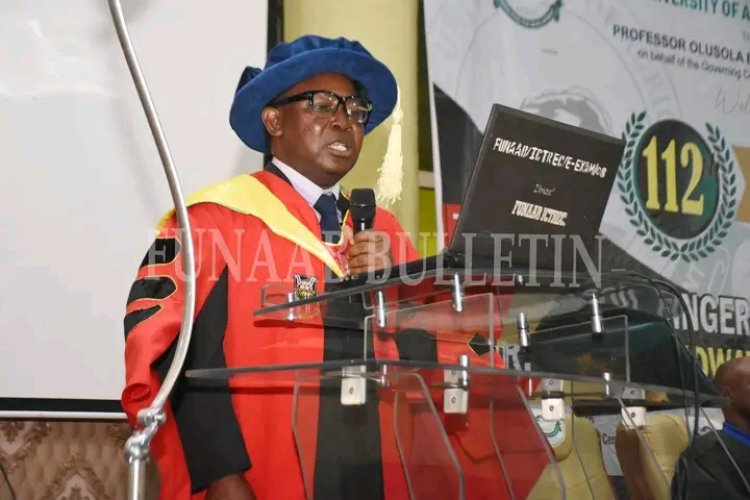
Federal University of Agriculture Abeokuta has called on the Federal Government to prioritise the exploration and strategic utilisation of rare earth element deposits discovered in Lagos and Ogun States as part of efforts to boost national economic development.
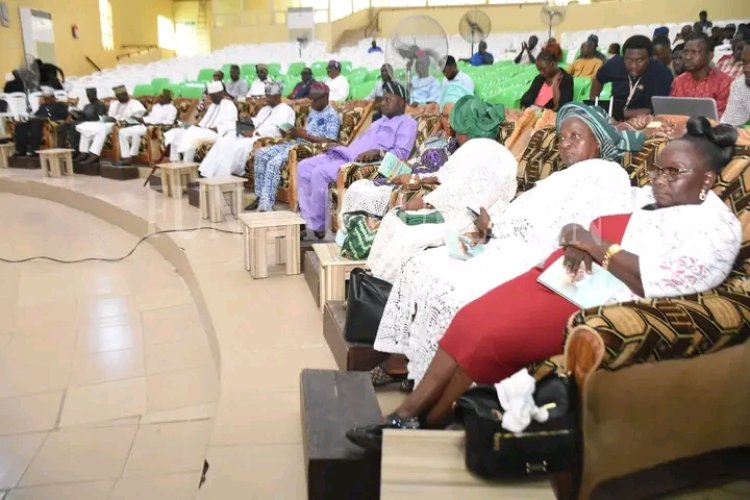
The call was made by Prof. Adewole Gbadebo of the Department of Geology, College of Environmental Resources Management, while delivering the institution’s 112th Inaugural Lecture titled “Rock and Soil Fingerprints on Water: My Groundwater Odyssey” at the Oluwafemi Balogun Ceremonial Building on April 8, 2026.
Prof. Gbadebo described rare earth elements as critical resources for modern technology and industrial advancement, urging the establishment of a dedicated regulatory framework to guide their sustainable exploration and exploitation. He said such a structure would position Nigeria competitively within the global mineral value chain.
He also warned that groundwater, while essential to human survival, could become hazardous if poorly managed, describing it as both a “lifeline and a potential risk pathway” for contamination and disease transmission.
The scholar identified over-extraction, industrial pollution, poor borehole maintenance, and climate variability as key drivers of groundwater degradation across different geological formations in Nigeria. He called for stricter environmental governance, including mandatory water quality certification for all boreholes and tougher penalties for industrial pollution, with fines directed toward environmental remediation.
Prof. Gbadebo further recommended the creation of a national groundwater monitoring system integrating hydrological, meteorological, and geochemical data to support early warning systems and evidence-based policymaking. He also emphasised the need for stronger public awareness and collaboration between researchers and policymakers to improve environmental sustainability.
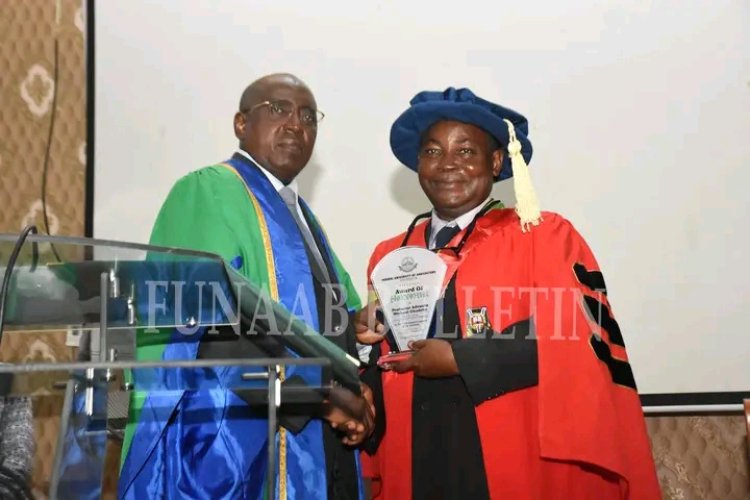
In his remarks, the Vice-Chancellor of Federal University of Agriculture Abeokuta, Prof. Babatunde Kehinde, described the lecture as a significant academic milestone, noting that it was the first inaugural lecture from the Department of Geology and the 15th from the College of Environmental Resources Management.
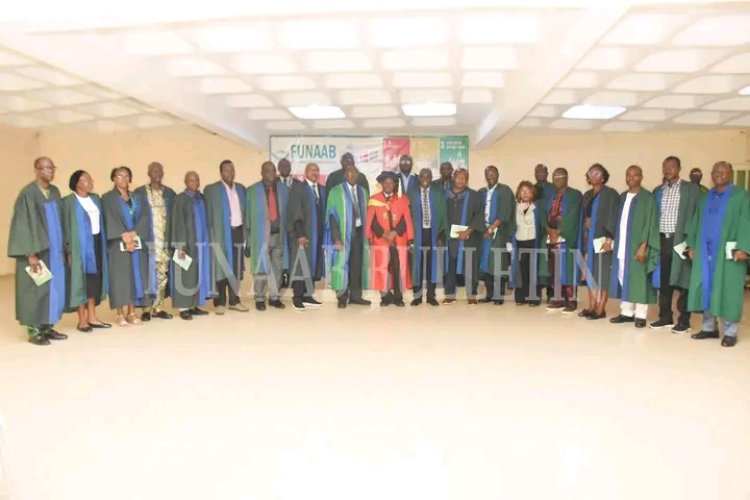
He commended Prof. Gbadebo’s academic contributions spanning over three decades, highlighting his extensive research output, postgraduate supervision record, and community impact through the provision of boreholes that have expanded access to potable water across multiple communities.