Nigeria’s Education Reforms Show Early Gains as Government Pushes Foundational Learning Agenda
Nigeria’s Minister of Education, Dr. Tunji Alausa, says ongoing education reforms are already delivering measurable improvements in foundational literacy and numeracy across the country. Speaking at the Education World Forum in London, he highlighted Nigeria’s unified approach to early learning under the Foundational Literacy and Numeracy (FLN) initiative, which standardizes teaching across formal and non-formal education systems.
 judithhh
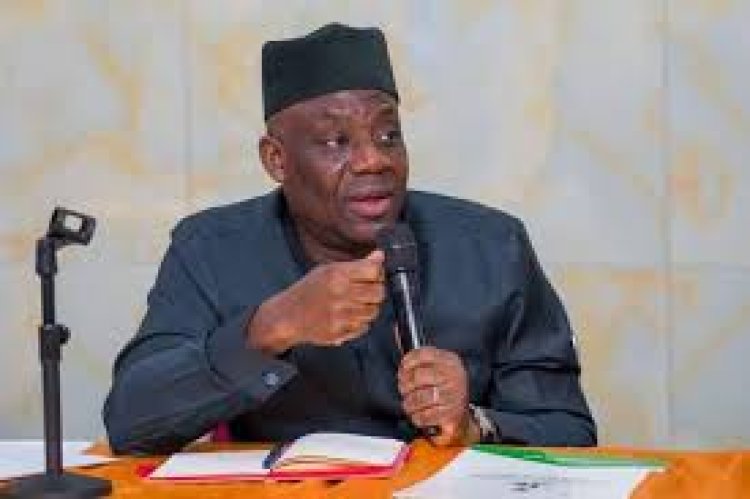
Nigeria’s Minister of Education, Dr. Tunji Alausa, has highlighted notable progress in the country’s ongoing education reforms, describing the results as transformative and capable of shaping future generations.
He made this known during a special roundtable session at the Education World Forum (EWF) in London, where he engaged global education leaders and policymakers on Nigeria’s efforts to strengthen foundational literacy and numeracy.
A key focus of his presentation was Nigeria’s push to improve foundational learning through the Foundational Literacy and Numeracy (FLN) initiative. According to him, the country has now streamlined the delivery of early learning programmes under a unified national standard that covers both formal schools and non-formal education systems. This approach, he explained, is designed to ensure consistency in how basic reading and numeracy skills are taught nationwide.
Dr. Alausa noted that the government is scaling up programmes such as RANA for Primary 1 to 3 pupils and “Teaching at the Right Level” for Primary 4 to 6 learners across 15 states under the Universal Basic Education Commission framework. These interventions rely on structured lesson plans, continuous teacher coaching, and regular student assessments to track progress and improve learning outcomes.
He also pointed to the Accelerated Basic Education Programme (ABEP), developed by the Nigerian Educational Research and Development Council, as a critical solution for addressing the needs of out-of-school children and adolescents. The programme, he said, is designed to deliver equivalent foundational literacy and numeracy skills within a three-year period.
Beyond federal initiatives, the minister highlighted state-level reforms that are already showing measurable results. He referenced programmes such as EKOEXCEL, KwaraLEARN, and BayelsaPRIME as examples of technology-driven and data-focused education models that are improving classroom outcomes.
According to him, these reforms are already producing significant gains. KwaraLEARN reportedly reduced learning deficiencies in foundational subjects by half within two years, while BayelsaPRIME increased literacy performance by 20 percentage points in just 19 weeks. He described these improvements as evidence that the reform model is effective and ready for broader national expansion.
On the policy front, Dr. Alausa said foundational literacy and numeracy have been placed at the heart of the government’s education agenda under the Renewed Hope framework. He added that work is ongoing to finalize a National Policy on Foundational Literacy and Numeracy, which will provide a legal and institutional foundation for sustained reforms across federal, state, and non-formal education systems.
The minister concluded that these efforts reflect a long-term strategy aimed at strengthening Nigeria’s education system from the ground up, with a focus on measurable outcomes and nationwide scalability.