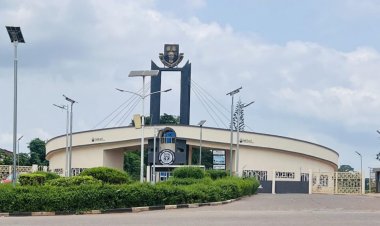
UNICROSS Students Protest Fee Increase, Suspend Payments Pending Talks with Management
Tension has heightened at the University of Cross River State (UNICROSS) following a substantial increase in tuition and related academic charges, which reportedly raised school fees from about ₦84,000 to approximately ₦180,000.
 Philip22

Tension has heightened at the University of Cross River State (UNICROSS) following a substantial increase in tuition and related academic charges, which reportedly raised school fees from about ₦84,000 to approximately ₦180,000.
The development has triggered strong reactions from students and campus leadership, prompting the Students’ Union Government (SUG), the National Association of Cross River State Students (NACRISS), as well as faculty and departmental representatives, to issue joint directives advising students to suspend all fee payments pending engagement with the university management.
Speaking on behalf of NACRISS, its President, Sen. Betebeke Joshua, said the decision to increase fees was taken without adequate consultation with students, describing the process as lacking transparency.
“The sudden increase in school fees was implemented without student engagement. We are demanding openness and constructive dialogue. As a public university, decisions that directly affect students must involve them,” he said.
Similarly, SUG President, Comr. Ogar Favour Johonobe, stated that while students acknowledge the possibility of a fee review, the magnitude of the increase is unacceptable.
“We are not opposed to an increment, but it must be reasonable and affordable. This level of increase undermines the institution’s mandate of providing accessible education, especially for indigenous students,” he said.
Students across various faculties have also expressed concern over the implications of the new fee structure. A 300-level student in the Faculty of Communication, Gift Udo, described the situation as demoralising, noting that the increase could force some students to defer or abandon their studies.
Another undergraduate, Moses Effiom, a 200-level student, said the adjustment disrupted financial plans already made by many students and their families.
“Most students worked during the holidays to meet the former fee requirements. This sudden change imposes an unexpected financial burden,” he said.
Student leaders insist that no payments should be made until the fee structure is reviewed and meaningful dialogue is held with relevant stakeholders. As of the time of this report, the university management has not issued an official response.