UNILAG Hosts Anti-Corruption Conference as Prof. Babawale Calls for Special Court, Stronger Institutions
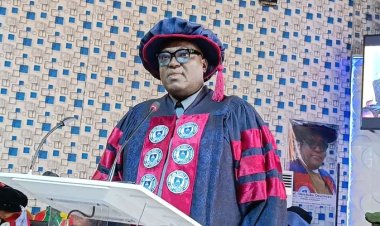
With these piercing words, Professor Babatunde Babawale, political scientist and immediate past Provost of the National Anti-Corruption Academy, Abuja, opened the tone-setting lecture at the international anti-corruption conference hosted by the Faculty of Social Sciences, University of Lagos (UNILAG) on Thursday, September 18, 2025.
 Philip22

With these piercing words, Professor Babatunde Babawale, political scientist and immediate past Provost of the National Anti-Corruption Academy, Abuja, opened the tone-setting lecture at the international anti-corruption conference hosted by the Faculty of Social Sciences, University of Lagos (UNILAG) on Thursday, September 18, 2025.
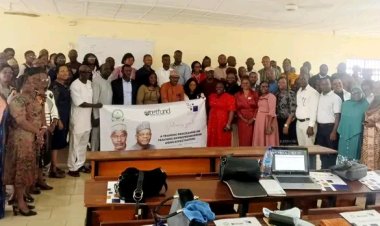
The conference, themed Politics, Governance, Probity, Religion and Corrupt Behavior in Nigeria, was held in collaboration with the Panafricana Strategic and Policy Research Group (PANASFSTRAG) and the Civil Society Legislative Advocacy Centre (CISLAC). It convened stakeholders in academia, governance, and civil society to interrogate Nigeria’s entrenched corruption crisis.

VC Ogunsola: Corruption Thrives in All Sectors
In her remarks, Vice-Chancellor, Professor Folasade T. Ogunsola, OON, FAS, stressed that corruption is not restricted to government circles but also corrodes academic institutions. She cited examples such as examination malpractice, plagiarism, misappropriation of funds, “gift authorship” in research, manipulation of grades, and abuse of administrative power.
“These are not lapses in judgment,” she said. “They are corruption in its clearest form, and they must be confronted with the same urgency as the misconduct we condemn in government.”
Professor Ogunsola reiterated UNILAG’s commitment to modeling integrity and cultivating ethical values in future leaders.

Faculty Dean Exposes Systemic Weaknesses
Dean of the Faculty of Social Sciences, Professor Adelaja Odukoya, described corruption as being sustained by political instability, weak institutions, bureaucratic inefficiency, and fragile legislative and judicial systems. Despite these challenges, he assured that the Faculty remains committed to driving conversations that promote accountability, civic education, and youth empowerment.
Babawale: A Case for Special Anti-Corruption Court
Delivering the keynote lecture, Professor Babawale revisited Nigeria’s political history, invoking Major Chukwuma Kaduna Nzeogwu’s 1966 coup grievances and asking if the same “political profiteers” remain. The audience thundered back: “Yes.”
He listed four damaging outcomes of corruption:
- Erosion of good governance
- Misappropriation of public funds
- Weakening of societal values
- Intensification of poverty
He further examined the economic and social toll, including skewed income distribution, reduced public investment, compromised reforms, and the rise of an underground economy.
“When public officials disregard due process and operate without accountability, corruption is not just likely—it is already at the door,” he warned.
To tackle this, he recommended the establishment of a special anti-corruption court to fast-track corruption cases, strengthen accountability, and restore public trust. He also advocated for transparent, merit-based leadership recruitment in public institutions.
CISLAC Calls for Multi-Sectoral Approach
Executive Director of CISLAC and Head of Transparency International Nigeria, Mallam Auwal Musa Rafsanjani, called for partnerships across government, academia, civil society, and faith-based institutions. He also raised alarm over illicit financial flows and money laundering, which drain resources needed for education, health, and infrastructure.
Breakout Sessions and Key Outcomes
The conference later split into six thematic sessions, tackling corruption in various sectors. Discussions emphasized:
- The need for public trust in EFCC, ICPC, and other anti-corruption agencies
- The importance of political will in reform implementation
- The role of state and local governments in establishing grassroots anti-corruption mechanisms
Speakers, including retired General Ishola Williams, underscored that the fight requires sincerity, unity, and practical action.
Staff Lounge Commissioned
Earlier, Professor Ogunsola commissioned a newly designed staff lounge at the Faculty of Social Sciences, accompanied by Deputy Vice-Chancellor (Academics and Research), Professor Bola Oboh, and other senior officials.
The lounge, furnished with modern amenities, is part of efforts to improve staff welfare and work-life balance. Commending the initiative, the Vice-Chancellor said staff well-being remains central to academic productivity and institutional excellence.
The anti-corruption conference ended with a powerful reminder: Nigeria’s corruption crisis is deep, but with sincerity, institutional reform, and ethical leadership, renewal remains possible — and universities must lead the charge.