UNILAG Professor Gloria Ayoola Urges Nigerians to Explore Healing Power of Indigenous Plants
Professor Gloria Abiodun Ayoola of the Department of Pharmaceutical Chemistry, Faculty of Pharmacy, University of Lagos (UNILAG), has reminded Nigerians that the cure to many of the world’s toughest diseases might just be growing in our backyards.
 Philip22

Professor Gloria Abiodun Ayoola of the Department of Pharmaceutical Chemistry, Faculty of Pharmacy, University of Lagos (UNILAG), has reminded Nigerians that the cure to many of the world’s toughest diseases might just be growing in our backyards.
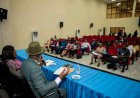
She made this assertion on Wednesday, October 8, 2025, while delivering the University’s 446th Inaugural Lecture titled “Molecules That Heal: The Exploration of a Medicinal and Natural Product Chemist.” The lecture, chaired by the Vice-Chancellor, Professor Folasade Ogunsola, OON, FAS, was held at the J.F. Ade-Ajayi Auditorium.

An accomplished scholar in pharmaceutical analysis, medicinal and natural products chemistry, Professor Ayoola explored nature’s healing potential and the scientific pursuit of life-saving compounds found in African plants.
From the African walnut and star apple to guava, mango, bitter leaf, and Efo Worowo (Senecio biafrae), she revealed how these plants contain molecules with powerful antioxidant, antibacterial, antidiabetic, and anti-inflammatory properties.
“Nature has never stopped giving,” she said, noting that advances in chromatography, spectroscopy, and bioinformatics have made it possible to isolate and understand these complex bioactive compounds more efficiently than ever before.
Professor Ayoola also addressed the growing global threat of antimicrobial resistance (AMR), presenting findings from her work on bisbiguanide analogues of chlorhexidine. She explained how minor chemical modifications can restore the potency of older antibiotics against multidrug-resistant bacteria known as ESKAPE pathogens.
By merging traditional medicinal wisdom with modern chemistry, nanomedicine, and computational tools, she envisioned a future where Nigeria and Africa play a leading role in global drug discovery. Drawing inspiration from plant-derived medicines like morphine, quinine, paclitaxel, and artemisinin, she emphasized that “molecules that heal” represent not only a scientific breakthrough but also a social responsibility to harness nature’s gifts sustainably for humanity’s benefit.

“Nigeria is blessed with many molecules that heal,” she affirmed. “We only need to keep exploring, testing, and transforming them into medicines that improve lives.”
Her lecture drew applause from colleagues, students, and guests, including the 9th Vice-Chancellor of UNILAG, Professor Tolu Odugbemi, NNOM, OON, who commended her blend of deep scientific insight and accessible delivery — a rare balance of scholarship, curiosity, and compassion.
About Professor Gloria Abiodun Ayoola
Born on December 25, 1969, in Ibadan, Oyo State, Professor Ayoola attended Sacred Heart Private School, Ibadan, and Federal Government Girls’ College, Oyo, before earning her A’ levels at Modes Study Centre, Oxford, United Kingdom.
She obtained her Doctorate in Medicinal Chemistry from the University of Bath in 1998, after completing her studies at University College London (UCL) School of Pharmacy. Her early research on cyclic-adenosine diphosphate ribose analogues laid the foundation for her lifelong pursuit of therapeutic innovation.
Joining UNILAG’s Faculty of Pharmacy in 2005, she rose through the ranks to become a Professor in 2018 and later served as Dean of the Faculty. She has supervised over eight doctoral candidates and more than one hundred master’s and undergraduate students.
Her contributions extend beyond UNILAG, serving as Deputy Editor of the Nigerian Journal of Health and Biomedical Sciences, Associate Editor of the International Journal of Health Research, and a board member of several reputable journals and organizations.
During her sabbatical at King’s College London, she led research on the design of efflux-resistant biocides — a promising direction in tackling drug resistance.

Professor Ayoola’s research continues to explore plant-derived compounds for their antibacterial, anticancer, anti-inflammatory, and antidiabetic potential. She has published over fifty peer-reviewed papers and has been recognized with multiple TETFund research grants, leadership fellowships, and awards.
She is married and blessed with four children.