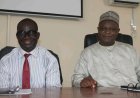
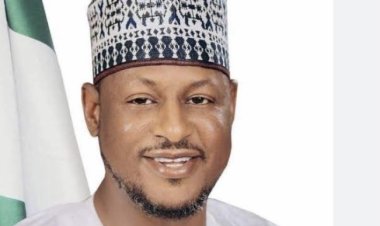
DAAD Strengthens Academic Ties with FUNAAB Following Landmark Partnership Agreement
Deutscher Akademischer Austauschdienst (DAAD) has reinforced its academic collaboration with Federal University of Agriculture, Abeokuta following the recent signing of a Memorandum of Understanding designating the institution as a host for its In-Country/In-Region Scholarship Programme (2027–2029 intake cycle).
 Philip22
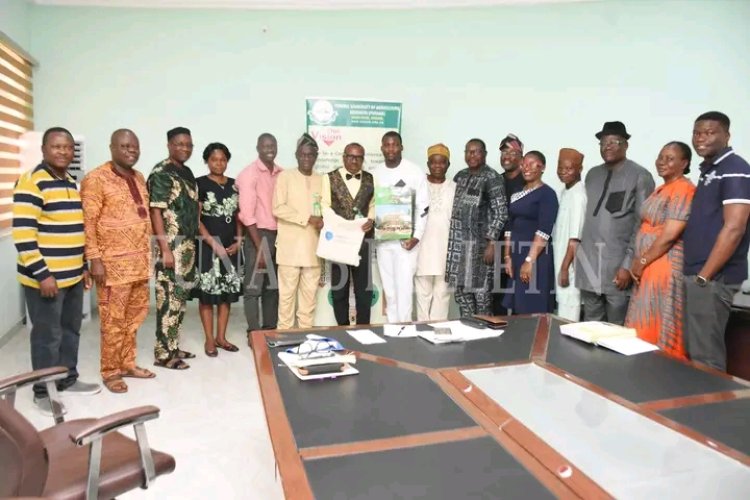
Deutscher Akademischer Austauschdienst (DAAD) has reinforced its academic collaboration with Federal University of Agriculture, Abeokuta following the recent signing of a Memorandum of Understanding designating the institution as a host for its In-Country/In-Region Scholarship Programme (2027–2029 intake cycle).

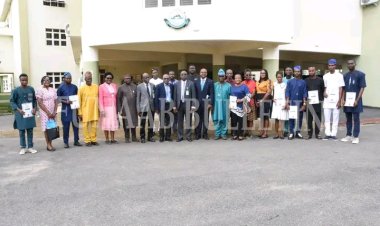
The development was further consolidated during a visit by DAAD’s Ghana Regional Office representative, Mr. Komivi Lasmothey, who engaged stakeholders at FUNAAB on March 19, 2026, with a detailed presentation on scholarship schemes, research funding opportunities, and academic mobility initiatives.
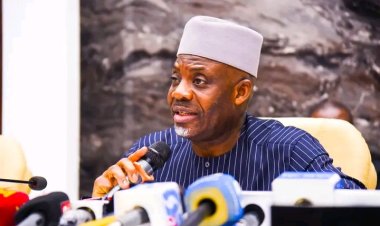
Mr. Lasmothey outlined DAAD’s broader mandate in supporting international academic exchange, capacity development, and research collaboration, emphasizing inclusive scholarship frameworks designed to strengthen higher education systems across developing regions.
Speaking on behalf of the Vice-Chancellor, Professor Babatunde Kehinde, the Deputy Vice-Chancellor (Academic), Professor Olusegun Idowu, reaffirmed the university’s commitment to effectively leveraging the partnership, noting that transparency and strategic implementation would guide the utilisation of all associated funding opportunities.
The DAAD representative commended the university community for strong participation in the engagement session despite a public holiday, describing it as evidence of institutional commitment to academic excellence and global collaboration. He also expressed satisfaction with his interactions during his first official visit to Nigeria.
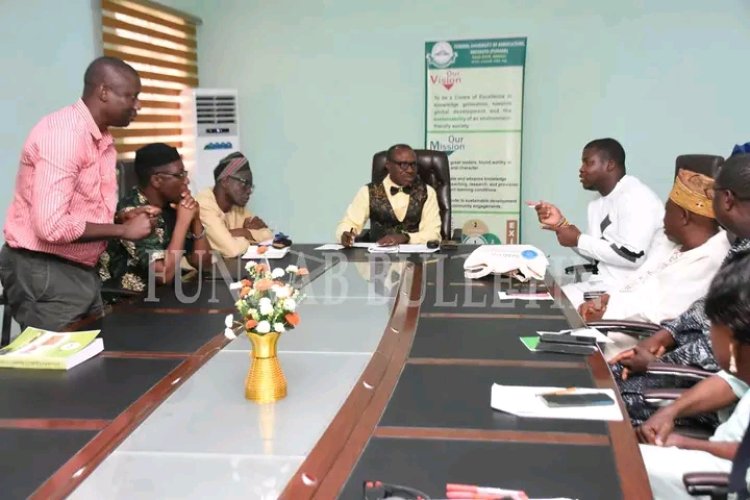
Mr. Lasmothey further referenced his prior involvement in FUNAAB’s Master’s programme in Physics selection process as a factor influencing deeper engagement with the institution.
He highlighted Germany’s sustained investment in international university partnerships through structured regional offices, research hubs, and academic exchange platforms, including lecturer deployment schemes aimed at strengthening teaching capacity and language instruction in partner institutions.
The engagement also reinforced DAAD’s alignment with global development priorities, including quality education, gender equality, and sustainable development, through its scholarship programmes targeting postgraduate studies linked to teaching and research development in home countries.
The partnership positions FUNAAB within a broader international academic ecosystem focused on research-driven development, institutional capacity building, and cross-border knowledge transfer.