UDUS Students Turn Yaji, Kuli-Kuli into Pepper Substitutes as Prices Soar
UDUS Students Turn Yaji, Kuli-Kuli into Pepper Substitutes as Prices Soar
 UmarFarouk123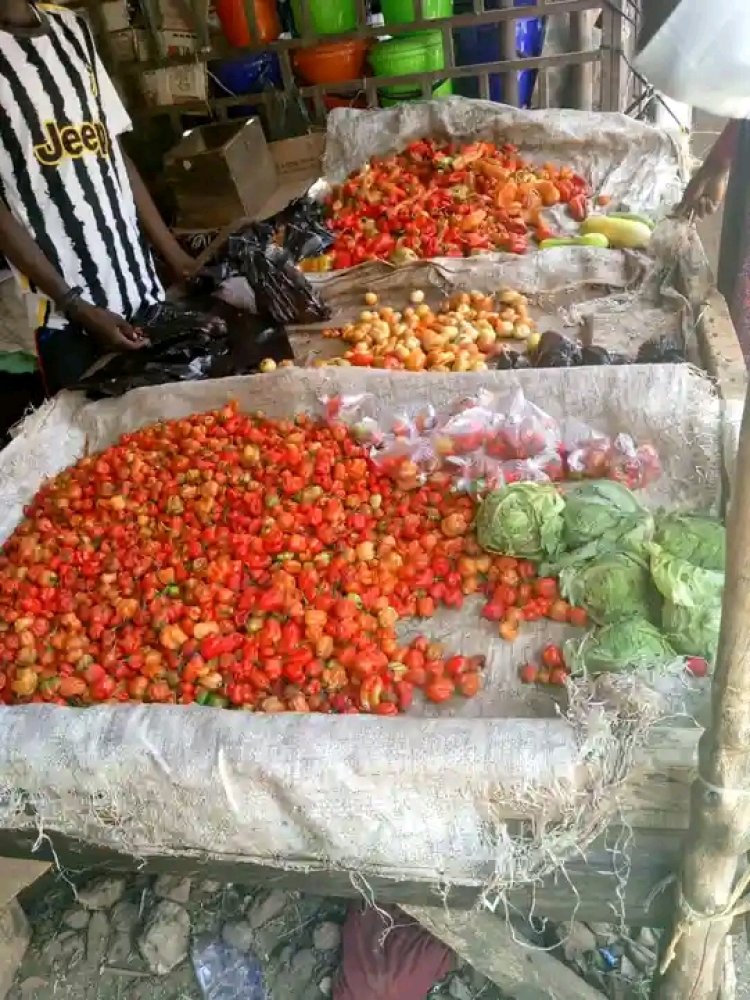
Sadiq, a 300-level Linguistics student, could hardly believe how quickly things had changed. Months ago, he would walk into the Usmanu Danfodiyo University Sokoto (UDUS) hostel minimart, buy fresh pepper without thinking twice, and cook the meals he enjoyed.
Sadiq is not alone. Across Usmanu Danfodiyo University Sokoto (UDUS), what used to be a basic ingredient for students has suddenly become expensive before the end of the 2025/2026 first semester academic draws closer.
Before, a N300 worth of fresh pepper could last three to four days, depending on students usage. Now, even a N500 pepper is hardly enough for a single meal, forcing students to add tomato paste or look for alternatives just to create something close to stew.
Sadiq said the shift has affected more than his meals. It has changed his appetite. According to him, he doesn't feel like eating sometimes.“Sometimes I don’t even feel like eating, it’s not just hunger, it’s the lack of satisfaction,” he said.
“This pepper started increasing during the exam period, but now it is worse,” he said. “In fact, it is one of those things that is making this school tiring for me.”
The rising cost of pepper at UDUS reflects a national trend. According to a survey by Nairametrics Research, food prices markets surged in March 2026 thanks to the rising petrol costs that drove up transportation and logistics expenses, triggering widespread increases in staple commodities.
The survey revealed a sharp reversal from February’s modest easing, with inflationary pressures returning across both perishable and non-perishable food categories. Traders attributed the spike to seasonal scarcity and a sharp increase in transport costs, especially fuel-related haulage expenses.
Tomatoes were among the most affected items. Big baskets rose from ₦40,000 to ₦60,000, a 50% increase, while oval varieties increased from ₦25,000 to ₦35,000, representing a 40% rise.
With a tight allowance, she has turned to cheaper alternatives. Instead of cooking, she often takes garri with Milo or eats bread just to save money.
“Sometimes I just drink Milo with garri instead of cooking,” she explained. But she admits this comes at a cost, as it's not healthy.
“It’s not healthy. You feel weak, especially during lectures. You can’t compare it to proper food.”
Ruqayat believes many students, especially female students, are quietly struggling. According to her, some of them can't complain openly, but they're really going through a lot.
For Musa Lawal, a 400-level Mathematics student, feeding has become a daily calculation. “This is a survival game,” he said.
Instead of pepper, Musa now relies on kuli-kuli to add flavour to his food, an innovation he says is affordable and can go with anything.
When this reporter asked him how he mixes kuli-kuli with seasoning to imitate the taste of pepper, he said he will crush it with Maggi and mix it, as it will give a kind of flavour… not pepper exactly, but something close.
Despite the creativity, Musa later admits the quality of food has dropped, as he no longer eats for enjoyment, but to survive.
He also noted that the decision is likely not good for health, as students may face serious health problems if it continues.
Aisha Bello, a 100-level student of political science, could not believe university life could be challenging, as things have turned out the way she didn't expect.Now, a well cooked meal with proper pepper is rare; She now survives mostly on bread and groundnuts.
Aisha admitted that the situation has affected her concentration in class. Hunger and poor nutrition make it difficult to focus during lectures. “You will be in class, but your mind is on food, or what you will eat, ” she said.
Despite everything, she tries to stay positive. She believes adapting is part of student life but hopes things improve for new students like her.
Fatima Sani, a 300-level English student, has developed her own method of coping.
“I mix yaji with kuli-kuli powder to create something like stew,” she said. It is not perfect, but it works.Beyond food, she says the situation has affected her social life, as she can't invite friends like before.
At the UDUS minimart, pepper seller Dan Baba says the problem did not start with him. According to him, they buy from the main market, and the prices there keep increasing every week. He added that transportation costs and scarcity are the major reasons.
He has students no longer but pepper as the pepper price keep skyrocketing, while most of them prefer yaji now. ama Sadiya, who sells rice and stew at the school minimart said the rising cost has affected her cooking.
“Pepper is one of the most expensive ingredients now,” she said. Thanks to that, She has reduced the quantity she uses.“If I cook like before, I will run at a loss,” she explained.
However, she noted that the students have noticed the difference, as they always complain that the stew is not as spicy as before. However to her, both her and the students are facing the same struggles.
Shubewu Abubakar, another pepper seller In the school campus, said pepper was abundant around January and February, before Ramadan.
"We were even selling it at a lower price and in larger quantities because supply was high," he said.
However, after Ramadan, around March and April, the price of pepper increased significantly. This situation is not our fault. The pepper we sell is supplied from places like Sokoto, Kebbi State, and Niger State. Currently, there are challenges affecting supply, such as issues with bridges and transportation, especially with trailers used to convey the pepper to Sokoto. These problems have made it difficult for us to get enough supply.
"This issue is not only affecting customers, but it is also affecting our business seriously. For example, the amount we used to make daily, around N10,000, has reduced drastically to about N6,000, N4,000, or even N4,500".
He also added that despite the situation, they are still trying their best to support the students, hence the reason why they still sell pepper to them at a reduced rate of N200.
"If not for this consideration, the price would have increased to N300 or more, like in other places. We understand that students have limited resources, so we are making efforts to ease the burden on them."
He told this reporter that several meetings had been held and the suppliers have been communicated with, because their business is being affected as well.
"We are hopeful that by June or July, things will improve. During that period, rainfall is expected to increase in farming areas, which will boost supply and help stabilize prices," he assured.
By Fathiu Jimoh