FUNAAB College Launches Leadership Workshop Series, Emphasises Ethics and Institutional Impact
The College of Food Science and Human Ecology of the Federal University of Agriculture, Abeokuta has inaugurated its Corporate Research and Leadership Workshop Series (CORELS), positioning ethical leadership as a critical driver of academic excellence and institutional relevance.
 Philip22
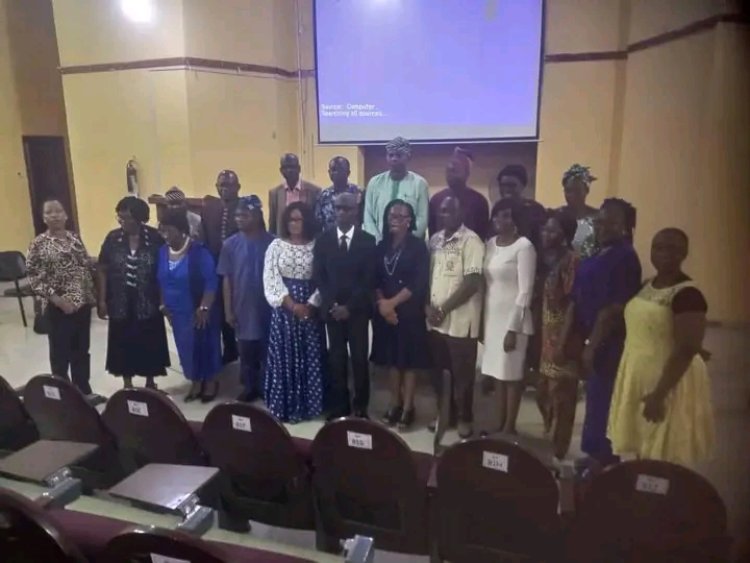
The College of Food Science and Human Ecology of the Federal University of Agriculture, Abeokuta has inaugurated its Corporate Research and Leadership Workshop Series (CORELS), positioning ethical leadership as a critical driver of academic excellence and institutional relevance.

The maiden workshop, themed “Leadership That Matters: Ethics, Influence and Service in Academia,” marked the formal rollout of a structured platform aimed at strengthening leadership capacity, research output, and mentorship culture within the academic environment.
Declaring the workshop open on behalf of the Vice-Chancellor, Babatunde Kehinde, the Dean of the Postgraduate School, Olusiji Sowande, stated that the initiative aligns with the University’s strategic focus on reinforcing its core values and institutional standards. He stressed that leadership within academia must be anchored on continuous self-assessment, ethical discipline, and a commitment to long-term impact.
Participants, particularly those in leadership roles, were urged to adopt a reflective approach to leadership by identifying performance gaps and strengthening competencies. The University also challenged emerging academic leaders to translate insights from the workshop into measurable improvements in governance, teaching, and research delivery.
In her welcome address, the Dean of COLFHEC, Adebukunola Omemu, described the initiative as a strategic intervention designed to institutionalise leadership development and research excellence. She noted that CORELS is structured to drive intentional research practices, strengthen mentorship frameworks, and embed leadership culture across all levels of the academic system.

According to her, the programme is not just a training platform but a long-term investment in building a pipeline of academically grounded and ethically responsible leaders capable of translating knowledge into societal value. She further emphasised the need for participants to actively interrogate their roles within the system and align their influence with institutional growth objectives.
Delivering the keynote address, the Guest Lecturer, Ololade Enikuomehin, defined impactful leadership as a function of ethics, influence, and service, warning that leadership structures lacking ethical foundations are inherently unstable. He argued that while leadership and influence are often visible, ethical discipline remains the most critical determinant of sustainability.
He outlined a leadership framework in which service is dependent on leadership, leadership is driven by influence, and influence is sustained by ethical integrity. He cautioned that the erosion of ethical values often leads to systemic inefficiencies and institutional decline, even in environments with strong leadership structures.
The keynote further reinforced that leadership extends beyond formal titles, noting that individuals exercise influence in diverse capacities. As such, personal integrity and ethical consciousness were identified as non-negotiable competencies for effective leadership. He described leadership as the capacity to mobilise individuals towards shared goals, stressing that true impact lies in fostering collaboration, driving commitment, and delivering measurable outcomes.
The workshop concluded with a strong call for ethical reorientation within academia, with participants encouraged to prioritise integrity, accountability, and service as foundational elements for sustainable leadership and institutional transformation.