FUNAAB Seminar Unveils Climate-Smart Solutions to Boost Sorghum Production
Researchers at the Federal University of Agriculture Abeokuta have identified climate-smart agricultural strategies capable of improving sorghum productivity amid increasing climate variability and declining soil fertility across parts of Nigeria.
 Philip22

Researchers at the Federal University of Agriculture Abeokuta have identified climate-smart agricultural strategies capable of improving sorghum productivity amid increasing climate variability and declining soil fertility across parts of Nigeria.
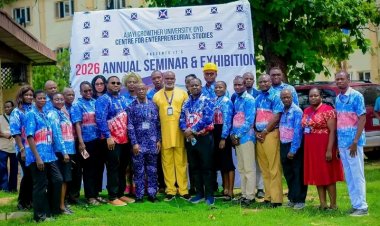
The findings were presented during the monthly seminar of the university’s Institute of Food Security, Environmental Resources and Agricultural Research by Research Fellow Dr. James Fadeyi and his research team.
The study focused on the impact of organic soil amendments on improved sorghum varieties cultivated within the forest–savannah transition agro-ecological zone, an area increasingly affected by erratic rainfall patterns and climate stress.
According to the researchers, the study aligns with global Climate-Smart Agriculture (CSA) objectives aimed at improving food production, strengthening adaptation to climate change, and reducing environmental vulnerabilities.
Presenting the research findings, Dr. Fadeyi noted that sorghum production among smallholder farmers continues to face major constraints despite the crop’s natural drought tolerance. He identified poor soil fertility, irregular rainfall, and nutrient stress as key factors responsible for persistent yield gaps estimated between 30 and 60 percent.
The research team examined three improved sorghum varieties — SAMSORG 44, SAMSORG 47, and SAMSORG 48 — under varying drought conditions while also assessing the effect of poultry manure on crop growth and yield performance.
Results from the study showed that severe drought stress had limited impact on major agronomic traits, including growth, flowering patterns, and grain yield. However, significant differences were observed among the sorghum varieties tested.
According to the findings, SAMSORG 44 consistently recorded superior grain yield and stronger performance across different stress conditions, outperforming the other varieties evaluated in the study.
The researchers also established that poultry manure significantly improved crop productivity, with an application rate of 5.0 tonnes per hectare identified as the optimum level for enhanced soil fertility and maximum yield performance.
Based on the outcome of the research, the team recommended SAMSORG 44 for cultivation in drought-prone regions and areas with shorter rainfall duration due to its resilience and yield advantage.
In contrast, SAMSORG 47 and SAMSORG 48 were considered more suitable for environments with extended rainfall periods or access to irrigation facilities.
The researchers further advocated wider adoption of poultry manure application as a sustainable soil management strategy and called for expanded field trials across multiple agro-ecological zones to validate the findings and encourage broader implementation of climate-smart farming practices.
The seminar reinforced growing concerns within Nigeria’s agricultural research community over climate-related threats to food security and the need for science-driven adaptation strategies to sustain crop production.