
FUTA Hosts Seminar on Beekeeping and Honey Production, Highlights Economic and Health Benefits
The Federal University of Technology Akure (FUTA), in collaboration with Tertiary Education Trust Fund (TETFUND), organized a two-day seminar on beekeeping and honey production, held on February 9–10, 2026.
 Philip22
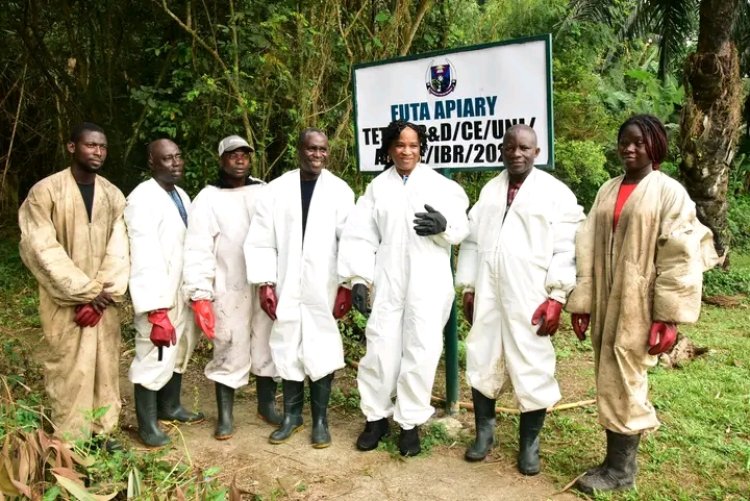
The Federal University of Technology Akure (FUTA), in collaboration with Tertiary Education Trust Fund (TETFUND), organized a two-day seminar on beekeeping and honey production, held on February 9–10, 2026.
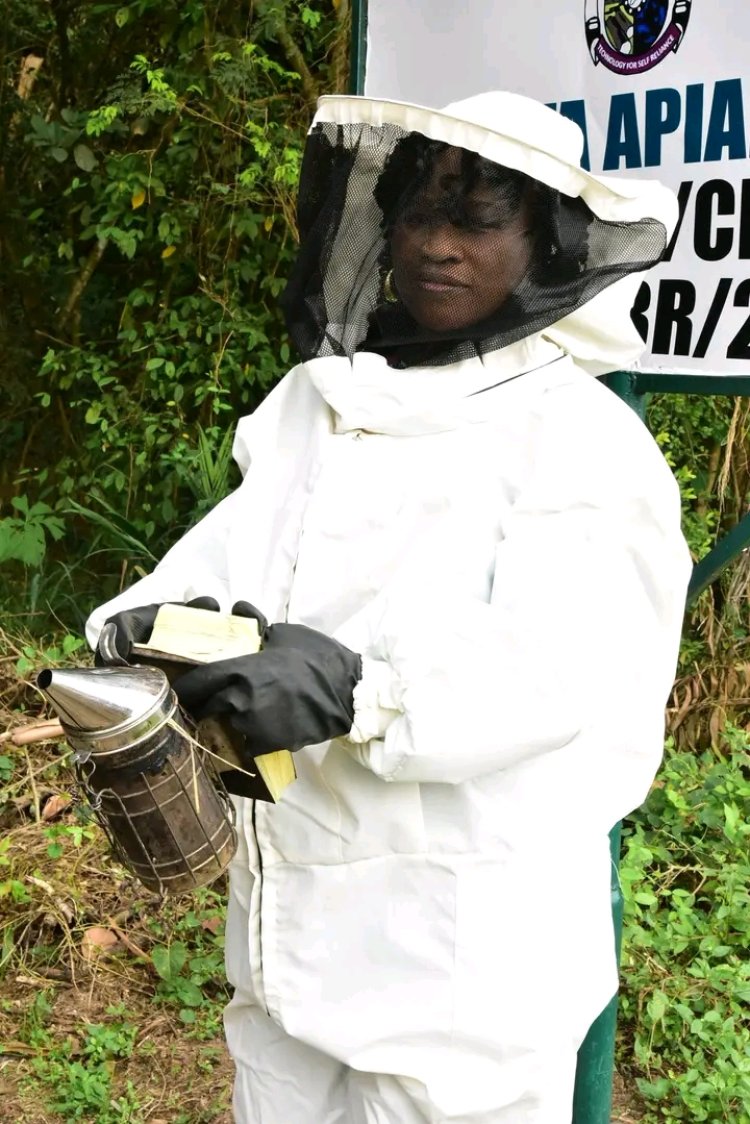
The event aimed to equip participants with practical knowledge on cottage honey production, promote best practices, and position beekeeping as a viable source of sustainable household income. Experts also emphasized the importance of ensuring honey’s originality for consumer safety.
Professor Timothy Amos, Principal Investigator and Deputy Vice-Chancellor (Academic) at FUTA, noted that the seminar is part of an Institution-Based Research project focused on enhancing livelihoods. Objectives include raising awareness of honey’s health benefits, establishing an apiary to conserve native bee stocks, and assessing the cost and profitability of honey production using top-bar technology. Professor Amos highlighted that factors such as education, income, and age influence honey consumption, urging marketers to ensure honey remains authentic and accessible to consumers.
Vice-Chancellor Professor Adenike Oladiji stressed the role of accountability in research and the importance of applied studies that drive community impact. She noted honey’s nutritional and medicinal properties—including antioxidants, anti-inflammatory, antibacterial, and wound-healing benefits—and highlighted the initiative as a means to empower students, providing productive, income-generating activities compatible with their academic commitments.
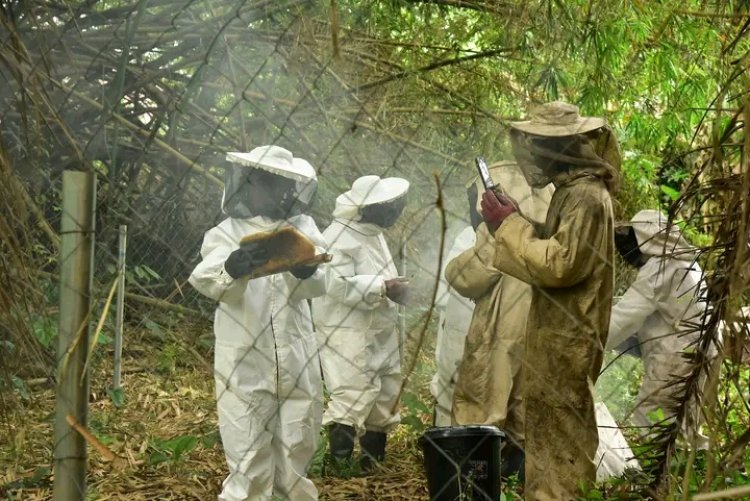
Dr. Akinwande Kayode, Senior Researcher in the Department of Biology, FUTA, provided guidance on small-scale cottage honey production, emphasizing careful selection of apiary locations away from agrochemical areas, under tree shade, and away from highways. He underscored proper colony management, artificial feeding, swarm control, and regular inspections to maximize production and colony health. Dr. Kayode also contrasted Nigeria’s nascent honey industry with large-scale industrial beekeeping abroad, citing a U.S. farm with over 3,000 hives, and highlighted the challenges of investment in the sector.
Olarewaju Olorunyomi, Chairman of the Big Keepers Association (Ondo State Chapter), stressed that beekeeping should be treated as a business venture rather than a pastime. He advised the use of quality hives, such as Kenya top-bar hives, and emphasized cultural practices that improve production. He warned against fake honey, which poses health risks, and highlighted the need for disease monitoring to prevent colony collapse disorder—a lesson learned from the U.S., where 35% of colonies were lost in 1924, compared to China’s 25% gain due to preventive measures.

The seminar highlighted FUTA’s commitment to community-oriented research, sustainable agriculture, and the promotion of beekeeping as a practical, income-generating activity with both economic and health benefits.