LASU Centre for Yoruba Studies Successfully Holds International Mother Language Day Celebration
The Centre for Yoruba Studies at Lagos State University (LASU) successfully marked International Mother Language Day on Tuesday, 24th February 2026, at the Aderemi Makanjuola Lecture Theatre, Main Campus, Ojo, Lagos.
 Philip22
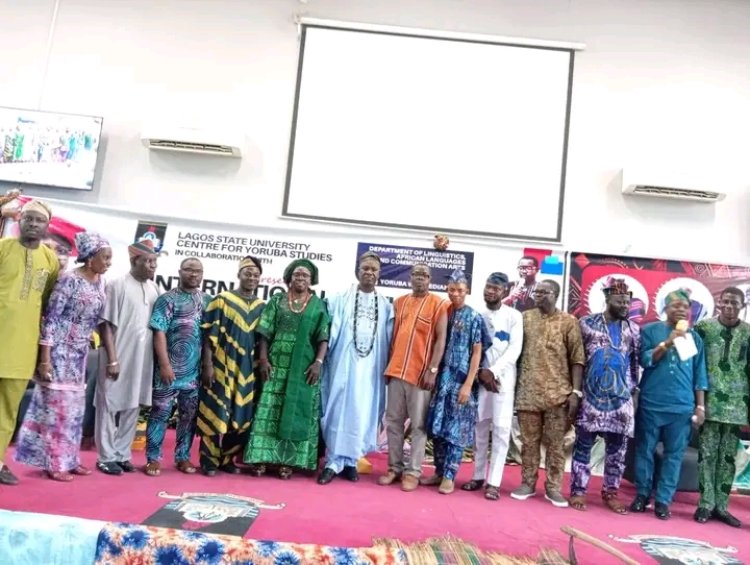
The Centre for Yoruba Studies at Lagos State University (LASU) successfully marked International Mother Language Day on Tuesday, 24th February 2026, at the Aderemi Makanjuola Lecture Theatre, Main Campus, Ojo, Lagos.
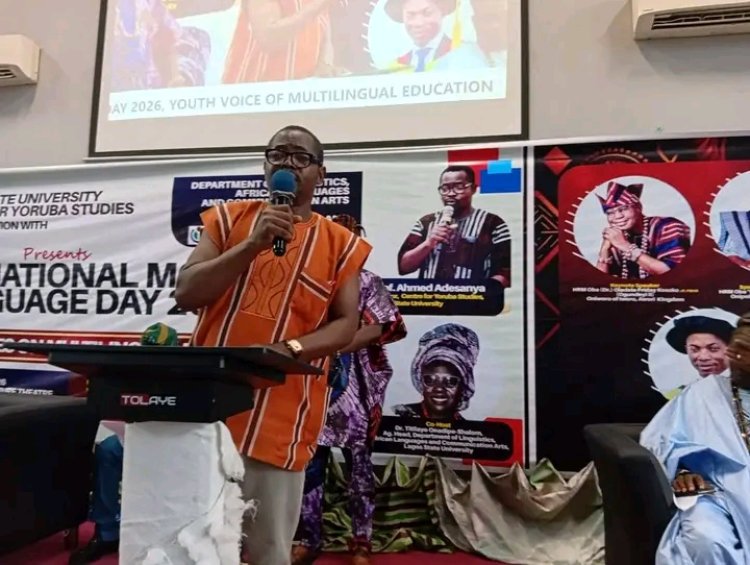
The event brought together scholars, students, and language advocates to reflect on the future of indigenous languages in a digital age.
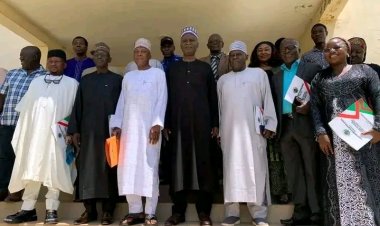
Earlier in the day, members of the Centre and invited guests paid a courtesy visit to the Vice-Chancellor, Professor Ibiyemi Ibilola Olatunji-Bello, mni, NPOM, and other university management officials. The visitation team included Professor Ahmed Adesanya, Director of the Centre for Yoruba Studies; HRM Oba Yisa Sola Adeniyi Olaniyan, Onipokia of Ipokia, Ogun State, represented by Chief Robert Akinlolu, the Aro of Ipokia Kingdom; Dr Titilayo Onadipe-Shalom, Acting Head of the Department of Linguistics; Professor Dayo Akanmu, Head, African Languages and Communication Arts; Professor Moses Akanbi, Immediate Past Dean of the Faculty of Science; the ace broadcaster of Fresh FM, Ifankaleluya; and members of the Yoruba Wikimedia Working Group. The University Management warmly received the team.
During the visit, Professor Ahmed Adesanya expressed gratitude to the Vice-Chancellor for creating an enabling environment and recognizing the importance of mother languages. Representing the Vice-Chancellor, Professor Oseni Taiwo Afisi, Deputy Vice-Chancellor (Academics), highlighted the need to promote indigenous languages, particularly Yoruba, to prevent endangerment. Professor Oluwatoyin Enikuomehin, Deputy Vice-Chancellor (Administration), welcomed the royal representative and recalled a prior agreement to conduct Senate meetings in Yoruba on Wednesdays to institutionalize the language within the university.
At the main event, Professor Adesanya urged attendees to embrace and preserve their mother tongue, noting that many families of Yoruba origin no longer speak the language at home. Chief Robert Akinlolu, representing the Onipokia of Ipokia, encouraged students to take pride in their indigenous language as a key part of their identity. Professor Ayotunde Ayodele, Dean of the Faculty of Arts, reaffirmed that youths are custodians of cultural heritage and urged them to safeguard their language.
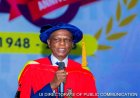
Mr Michael Sodiq, representing the Yoruba Wikipedia Group, advised young people to remain rooted in cultural values and actively promote the language. The keynote speaker, Professor Moses Akanbi, Immediate Past Dean of the Faculty of Science, spoke on multilingual learning and technology’s role in advancing indigenous languages. He emphasized that multilingualism drives cognitive development and that no single language can carry the full weight of human understanding.
Professor Akanbi warned that indigenous languages risk losing global relevance if excluded from digital platforms. He highlighted Yoruba’s structural sophistication and tonal depth, stressing that the language is intellectually rich and precise.
The workshop concluded with a call for structured integration of indigenous languages into education, digital innovation, and policy frameworks. Participants agreed that the main challenge is not a lack of heritage but the absence of deliberate inclusion in contemporary systems. The event reaffirmed LASU’s commitment to promoting linguistic diversity and strengthening indigenous language scholarship in Nigeria and beyond.