UNILAG’s Nigeria Artificial Intelligence Research Laboratory Hosts Inaugural Webinar on AI for Inclusive Education
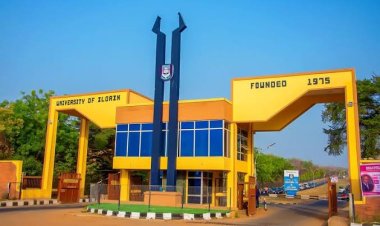
The Nigeria Artificial Intelligence Research Laboratory (NAIL) at the University of Lagos (UNILAG) has held its maiden webinar on the role of Artificial Intelligence (AI) in promoting inclusive and personalized education.
 Philip22

The Nigeria Artificial Intelligence Research Laboratory (NAIL) at the University of Lagos (UNILAG) has held its maiden webinar on the role of Artificial Intelligence (AI) in promoting inclusive and personalized education.
The virtual event, themed “AI for Inclusive Education: Building Adaptive Learning Tools for Personalized Assessments with Bloom’s Taxonomy,” brought together scholars, researchers, and education practitioners to explore how AI can revolutionize teaching and learning, particularly within the Nigerian and African contexts.
AI for Personalized and Equitable Learning
Dr. Oladipupo Sennaike, Principal Investigator at NAIL and Lecturer in the Department of Computer Science, Faculty of Computing and Informatics, opened the session with an overview of the Laboratory’s research focus. He highlighted three major project areas:
- Foundational language models for translation (beginning with Yoruba and Hausa),
- Personalized learning systems tailored to Nigeria’s educational realities, and
- Ethical frameworks guiding the use of AI in education.
He emphasized the lab’s commitment to capacity building, noting ongoing collaborations involving PhD, Master’s, and postdoctoral researchers, as well as international fellows working on AI-driven educational innovation.
Keynote on Adaptive Learning and Bloom’s Taxonomy
Delivering the keynote address, Dr. Yetunde Folajimi, an AI and Education expert from the Wentworth Institute of Technology, United States, underscored the potential of AI to facilitate personalized learning. She explained that, unlike conventional systems that rely on uniform curricula and standardized tests, AI enables adaptability to individual learner needs.
According to her, AI-powered systems can assess a learner’s strengths and weaknesses, adjust instruction accordingly, and provide equitable learning opportunities regardless of socio-economic or educational background.
Dr. Folajimi further highlighted Bloom’s Taxonomy—a foundational model for classifying cognitive skills—as a framework for designing AI tools capable of generating questions and tasks suited to each learner’s level. She showcased adaptive learning systems that evolve dynamically in response to student performance, providing remedial support where needed and more advanced challenges when learners are ready.
Bridging Theory and Practice in AI Education
The keynote speaker also addressed key barriers to AI adoption in education, including the lack of localized data, resource constraints, teacher apprehension, and the difficulty of applying personalized learning in overcrowded classrooms.
To demonstrate practical progress, participants were shown AI tools currently under development — including systems that classify examination questions based on Bloom’s Taxonomy and large language models used to expand question banks for educators. These examples underscored how AI is bridging the gap between research and real-world classroom application.
The webinar marked a significant milestone in NAIL’s efforts to position UNILAG at the forefront of AI-driven educational innovation, fostering research, collaboration, and the ethical application of technology to promote inclusive learning for all.