
FUTA Registrar Advocates Full Digital Transformation of Nigerian Universities at National Workshop
The Registrar of Federal University of Technology, Akure, Mr. Charles Adeleye, has called on Nigerian universities to accelerate the adoption of comprehensive digital transformation strategies aimed at improving administrative efficiency, service delivery, and institutional competitiveness.
 Philip22

The Registrar of Federal University of Technology, Akure, Mr. Charles Adeleye, has called on Nigerian universities to accelerate the adoption of comprehensive digital transformation strategies aimed at improving administrative efficiency, service delivery, and institutional competitiveness.
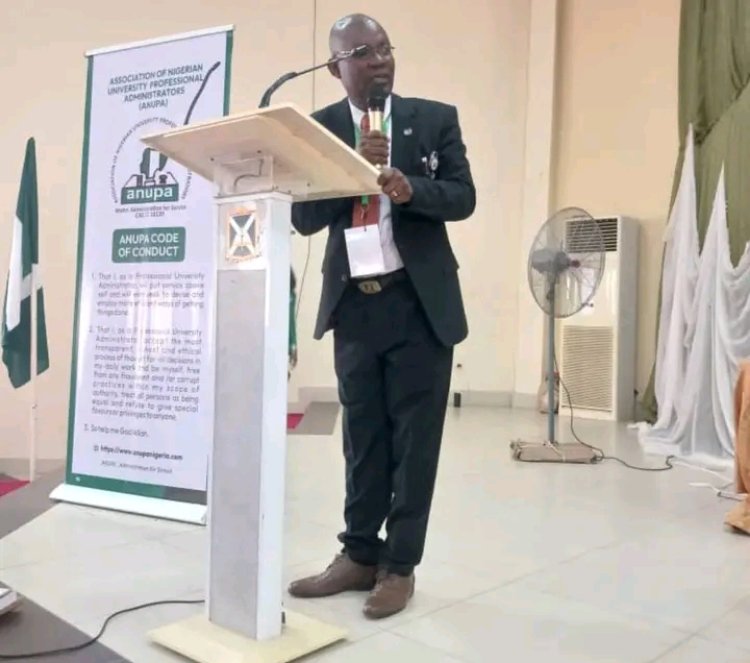
Adeleye made the call while presenting a paper titled “Designing and Implementing a University-Wide Digital Administration Transformation Roadmap” during the 2026 National Training Workshop of the Association of Nigerian University Professional Administrators held at Ajayi Crowther University.
Speaking at the workshop, the FUTA Registrar noted that many tertiary institutions in Nigeria still rely heavily on manual and paper-based administrative systems, a situation he said continues to cause operational delays, inefficiency, and poor service delivery.
He explained that the growing demand for digital governance, alongside the Federal Government’s directive to phase out paper-based operations in public institutions, has made digital transformation an urgent necessity for universities across the country.
According to Adeleye, digital transformation goes beyond simply converting physical documents into electronic formats. He described it as a complete restructuring of administrative procedures, institutional policies, and workplace culture to align with modern technological realities.
The presentation identified key administrative areas requiring immediate digitisation, including admissions processing, course registration, transcript management, student records administration, and staff-related services.
Adeleye stated that deploying technologies such as electronic forms, e-signatures, cloud storage systems, and centralized student information management platforms would significantly improve operational efficiency, transparency, and accountability within university systems.
He also stressed the importance of workflow automation, explaining that automating internal processes would allow administrative tasks to move seamlessly across departments without unnecessary manual intervention.
According to him, such systems would drastically reduce processing time, minimise errors, and strengthen institutional accountability mechanisms.
Despite the numerous advantages associated with digital transformation, Adeleye acknowledged several implementation challenges, including resistance to change among staff, inadequate digital literacy, and rising cybersecurity threats.
To address these concerns, he recommended robust change management strategies, continuous staff training programmes, and the deployment of strong cybersecurity frameworks capable of protecting institutional data and digital infrastructure.
The FUTA Registrar further emphasized the importance of governance structures in sustaining digital reforms, calling for clearly defined ICT policies, data protection regulations, and dedicated institutional committees to supervise digital transformation initiatives.
Without proper governance mechanisms, he warned, digitalisation efforts could become fragmented, ineffective, and difficult to sustain over time.
On implementation strategy, Adeleye proposed a phased approach beginning with infrastructure development and staff capacity building, before progressing to system integration, process optimisation, and eventually the deployment of smart campus technologies.
He maintained that successful digital transformation must remain people-centred, stressing that technology alone cannot deliver meaningful outcomes without adequate staff readiness and institutional support.
“Universities that embrace digital transformation will not only enhance administrative efficiency but also improve the student experience, strengthen research output, and position themselves competitively on the global stage,” he stated.

The workshop attracted senior university administrators from different institutions across Nigeria, with discussions focusing on modern strategies for reforming and digitising administrative systems within the country’s higher education sector.