
FUHSO Unveils Findings from Major TETFund Lassa Fever Research, Calls for Stronger Public Health Interventions
Federal University of Health Sciences, Otukpo has concluded the final dissemination of findings from its TETFund-sponsored Lassa Fever Mega Grant research, unveiling critical data on the transmission patterns, risk factors, and public health implications of the disease across North-Central Nigeria.
 Philip22
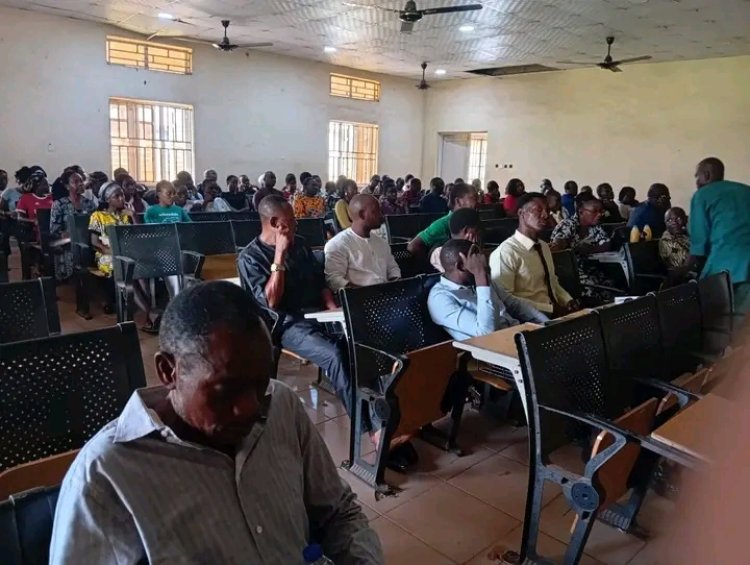
Federal University of Health Sciences, Otukpo has concluded the final dissemination of findings from its TETFund-sponsored Lassa Fever Mega Grant research, unveiling critical data on the transmission patterns, risk factors, and public health implications of the disease across North-Central Nigeria.
The dissemination event, held on Tuesday, May 5, 2026, at the university’s Multipurpose Hall B, Take-off Campus in Otada, brought together researchers, students, academic staff, community representatives, and media stakeholders.
The multi-year research project focused on investigating the seroprevalence, incidence, transmission dynamics, and environmental risk factors associated with Lassa fever in North-Central Nigeria, a region widely regarded as endemic to the viral disease.
In his welcome address, the Principal Investigator, Joseph Okopi, disclosed that the project received approval in 2022 and was officially launched in 2023 under the TETFund Mega Grant initiative.
Professor Okopi described the research as a major contribution to public health knowledge, noting that the findings provide valuable insights capable of shaping intervention strategies at individual, household, and national levels.
The Vice-Chancellor of the institution, Francis Uba Aba, commended Tertiary Education Trust Fund for sustaining investments in research and innovation within Nigerian universities.
He described infectious diseases such as Lassa fever as ongoing global health threats requiring evidence-based solutions and reaffirmed the university’s ambition to position itself as a centre of excellence in health sciences research and innovation.
Professor Aba also urged researchers to maintain scientific rigour while ensuring that research outcomes remain relevant to pressing community health challenges.
Delivering a keynote lecture to commemorate World Hand Hygiene Day, Audu Onyemocho stressed the importance of proper hand hygiene in combating infectious diseases.
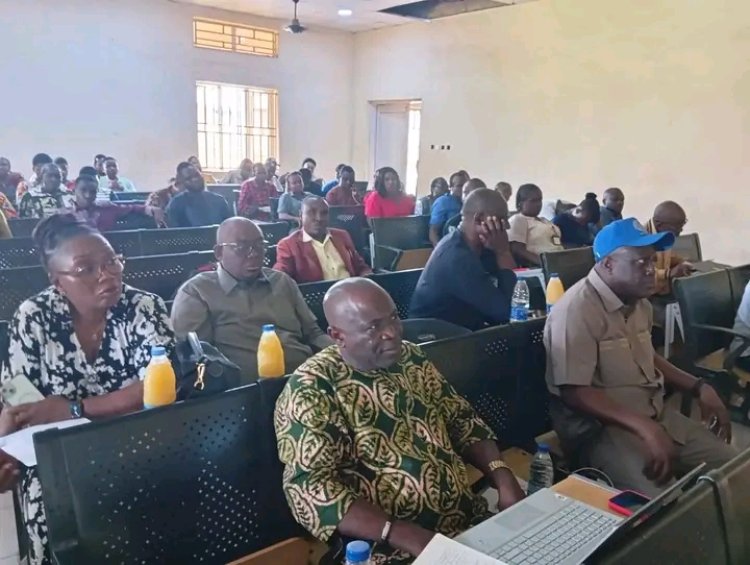
According to him, more than one million infections occur globally every day, many of which could be prevented through regular and effective handwashing practices. He linked improved hygiene directly to reduced transmission of Lassa fever and revealed that although no approved vaccine currently exists for the disease, several vaccine trials are ongoing through international partnerships.
Presenting findings from rodent studies conducted under the project, Ovie Edegbene explained that understanding the biological behaviour of rodent reservoirs remains critical to identifying how the virus spreads within affected communities.
He noted that researchers adopted trapping methods suited to local environmental realities and credited community participation for improving field access and data collection, especially in areas impacted by insecurity and logistical limitations.
Providing updates on the core findings of the study, Professor Okopi stated that Lassa fever transmission is driven largely by environmental and household exposure, with rodent infestation, poor food storage practices, and inadequate housing structures identified as major risk factors.
He further disclosed that the disease predominantly affects individuals within the active working-age population and recommended targeted environmental interventions instead of broad, generic public health campaigns.
A separate presentation delivered on behalf of Temidayo O. Omotenhinwa established a strong relationship between Lassa fever prevalence, poverty, and poor housing conditions.
The findings called for a policy shift toward structural and environmental interventions, alongside stronger surveillance systems, rather than depending solely on behavioural change communication strategies.
In the final presentation, Steven Abah highlighted the institutional impact of the Mega Grant project, revealing that the research generated over 2,300 samples and significantly enhanced the university’s international research visibility through real-time data application.
He also outlined plans by the university to integrate automation and robotics into research operations and disclosed ongoing efforts toward establishing a Centre of Excellence for Emerging and Re-emerging Diseases.
Professor Abah further called for sustained collaboration, increased grant mobilisation, and continuous innovation to strengthen Nigeria’s disease surveillance and response capacity.
Despite challenges ranging from insecurity in some study locations to logistical difficulties and funding delays, the research team disclosed that the project successfully achieved about 95 per cent of its objectives and produced multiple peer-reviewed publications.

The event concluded with a vote of thanks delivered by Professor Joseph Okopi, followed by a group photograph involving researchers, university officials, and stakeholders.