UCH Management Congratulates Prof. Olapade-Olaopa on Election as WFME President-Elect
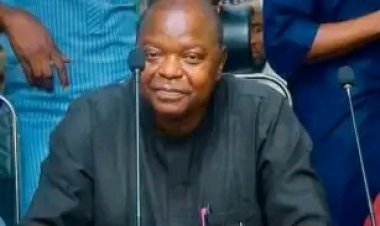
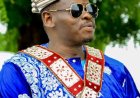
The Management of the University College Hospital (UCH), Ibadan, has congratulated Professor Emiola Oluwabunmi Olapade-Olaopa on his election as the 5th President of the World Federation for Medical Education (WFME), with his tenure scheduled to commence on January 1, 2027.
 Philip22

The Management of the University College Hospital (UCH), Ibadan, has congratulated Professor Emiola Oluwabunmi Olapade-Olaopa on his election as the 5th President of the World Federation for Medical Education (WFME), with his tenure scheduled to commence on January 1, 2027.

Professor Olapade-Olaopa is the 11th Provost of the College of Medicine, University of Ibadan, the 23rd Head of the Department of Surgery, University of Ibadan, and an Honorary Consultant Urologist at the University College Hospital, Ibadan.
In remarks during a recent interview with the UCH Media Unit, he explained that the WFME is a global body comprising medical schools and institutions responsible for coordinating medical education across six world regions, with representation from major international stakeholders including the World Medical Association, the World Health Organization, the Junior Doctors Network, and the International Federation of Medical Students.
He noted that the federation plays a key role in representing medical education institutions at global policy platforms such as the United Nations General Assembly, WHO assemblies, and international economic forums including the G7, G20, and the Davos Economic Summit.
Professor Olapade-Olaopa further stated that WFME is responsible for developing global standards in undergraduate and postgraduate medical education, accreditation systems for medical councils, and continuous professional development frameworks. He emphasized that these standards are principle-based, allowing regional adaptation depending on local realities and resource availability.
He explained that this approach ensures that uniform global rules are not imposed on countries with differing economic capacities, stressing that his leadership would prioritize equity and contextual flexibility in the application of global standards.
According to him, medical education operates on a principle of “global standards with local application,” a model increasingly described as “glocalization,” which balances international best practices with regional realities.
He also highlighted ongoing global discussions around strengthening medical education systems in response to workforce migration challenges, commonly referred to as “brain drain,” particularly affecting Africa and Asia. He noted that WFME is collaborating with global health organizations to develop strategies that address the structural causes of workforce depletion in these regions.
On emerging technologies, Professor Olapade-Olaopa stated that his tenure would support the responsible integration of artificial intelligence in medical education and practice, tailored to regional needs, with the objective of enhancing—not replacing—human clinical judgment.
In his reaction, the Chief Medical Director of UCH, Professor Jesse Abiodun Otegbayo, congratulated Professor Olapade-Olaopa on the achievement, describing his election as a reflection of his outstanding contributions to healthcare delivery, medical education, and institutional leadership.