UI Vice-Chancellor Urges Male Students to Reject Toxic Masculinity, Embrace Emotional Strength
The Vice-Chancellor of the University of Ibadan, Kayode O. Adebowale, has called on male students to redefine traditional notions of masculinity, stressing that emotional expression is not a sign of weakness and that men are not burdens to society.
 Philip22

The Vice-Chancellor of the University of Ibadan, Kayode O. Adebowale, has called on male students to redefine traditional notions of masculinity, stressing that emotional expression is not a sign of weakness and that men are not burdens to society.

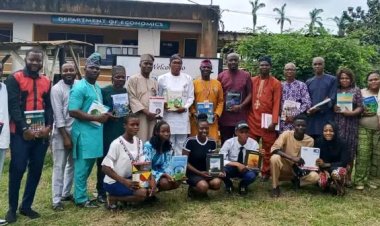
He made the remarks at a programme organised by the university’s Gender Mainstreaming Office in collaboration with the Policy Innovation Centre, focused on engaging male students in conversations around identity, responsibility, and evolving gender roles.
Addressing participants, Adebowale said society must move beyond producing “angry and silent men” and instead nurture individuals capable of emotional intelligence, empathy, and constructive engagement. He described the programme’s theme, centred on reimagining masculinity in contemporary Africa, as a critical intervention rather than a purely academic exercise.
He noted that while gender discourse in Africa has historically prioritised the empowerment of women and girls, the challenges facing boys and young men have remained largely overlooked. According to him, long-standing cultural expectations have imposed restrictive definitions of manhood, often equating strength with emotional suppression and discouraging vulnerability.
The Vice-Chancellor criticised the enduring belief that men should not express emotions, arguing that such conditioning limits their roles to providers and protectors while denying them the space to be nurturers or individuals deserving of care. He warned that the consequences are evident in a growing number of men struggling silently with mental health challenges, including rising suicide rates and stress-related illnesses.
He added that these pressures also manifest in broader societal issues, including violence, reluctance to seek psychological support, and strained family relationships. He described the situation as a systemic failure in how masculinity is conceptualised and taught.
Adebowale emphasised that the initiative was not designed to criticise men but to provide a platform for redefining masculinity in a way that embraces empathy, collaboration, and emotional balance. He reaffirmed the institution’s commitment to gender mainstreaming as a comprehensive development strategy, aimed at creating supportive environments where young men can grow into responsible and well-rounded individuals.
In her welcome address, the Director of the Gender Mainstreaming Office, Funmilola Ajani, described the conversation as both timely and necessary, noting that shifting social and economic realities across Africa are reshaping expectations of manhood.
She acknowledged the contributions of her predecessor, Francisca Ukpokolo, who initiated the concept for the workshop, and highlighted the need for structured guidance to help young men navigate the tension between traditional norms and modern expectations.
Ajani stressed that the objective was not to discard cultural identity but to critically assess which values should be retained or redefined in line with contemporary realities. She said the programme serves as a platform for reflection and dialogue on the kind of men young people aspire to become in a rapidly changing society.

The workshop featured keynote presentations by Ifeoma L. Idigbe, founder of the Boys to Men Foundation, and Dare Olagoke-Adaramoye, both of whom addressed issues surrounding healthy masculinities and personal development.
Participants also engaged in breakout sessions covering mental health, finances, relationships, and career resilience, while awards were presented to outstanding contributors in pre-event activities.