Women Now Outnumber Men in Higher Education Globally, UNESCO Reports
UNESCO has revealed that women now outnumber men in higher education globally, with 114 women enrolled for every 100 men in 2024. The report shows that university enrollment worldwide has more than doubled since 2000, reaching 269 million students.
 judithhh
Women Are Now Dominating Higher Education Globally — But the Full Story Is More Complex
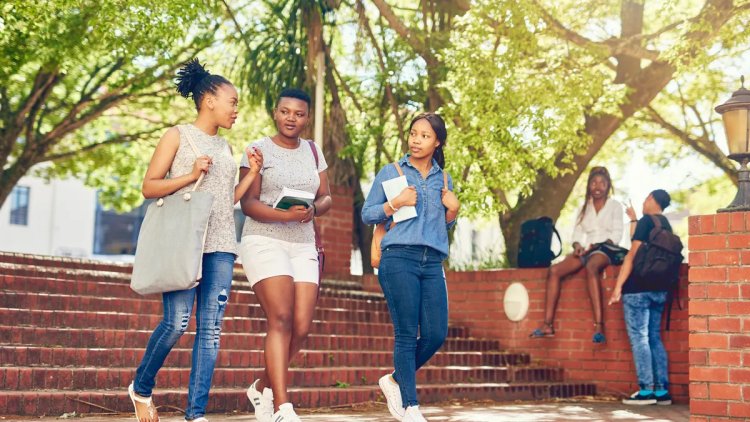
For decades, global conversations around education focused heavily on improving girls’ access to schools and universities. Today, a major shift has emerged: women now outnumber men in higher education worldwide.
According to a new report released by UNESCO, there were **114 women enrolled in higher education for every 100 men globally in 2024**. The report marks a significant milestone in global education and highlights how rapidly educational opportunities for women have expanded over the past two decades.
But while the numbers show progress, the reality beneath them reveals persistent inequalities, regional gaps, and challenges that still affect millions of students around the world.
The UNESCO report revealed that higher education enrollment worldwide has more than doubled since 2000, growing from around 100 million students to 269 million in 2024.
One of the most striking findings is that women have now achieved — and in many places surpassed — gender parity in university enrollment across nearly every region of the world.
Regions like Central and South Asia, once significantly behind, have seen remarkable progress. In 2000, only 68 women were enrolled in higher education for every 100 men. By 2023, the region had reached gender parity.
This transformation reflects years of policy reforms, advocacy campaigns, scholarship programs, and changing cultural attitudes toward educating women.
Despite global progress, sub-Saharan Africa remains the only region where gender parity in higher education has not yet been achieved.The report also revealed extremely low participation rates in the region overall. While nearly 80% of young people in Western Europe and North America are enrolled in higher education, only 9% of young people in sub-Saharan Africa attend universities or other higher institutions.
For many families across developing regions, higher education still remains financially out of reach.Although women now dominate university enrollment statistics, the report notes that equality has not fully extended into leadership and advanced academic spaces.Women remain underrepresented at the doctoral level and occupy only about a quarter of leadership positions in academia globally.
This suggests that access to education does not automatically translate into equal representation in decision-making, research leadership, or career advancement.
In many societies, women still face barriers such as: workplace discrimination unequal pay, family-care responsibilities, and limited mentorship opportunities.
Another major trend identified in the report is the growth of international student mobility.
The number of students studying outside their home countries has more than tripled over the last 20 years, increasing from 2.1 million in 2000 to nearly 7.3 million in 2023.
Countries like:
-the United States,
- the United Kingdom,
- Australia,
- Germany,
- Canada,
- Russia,
- and France
currently host about half of all international students worldwide.
Meanwhile, emerging destinations such as Turkey and the United Arab Emirates are becoming increasingly attractive to global students due to affordability, strategic location, and expanding university systems.
UNESCO also found that private institutions now account for about one-third of the global student population.
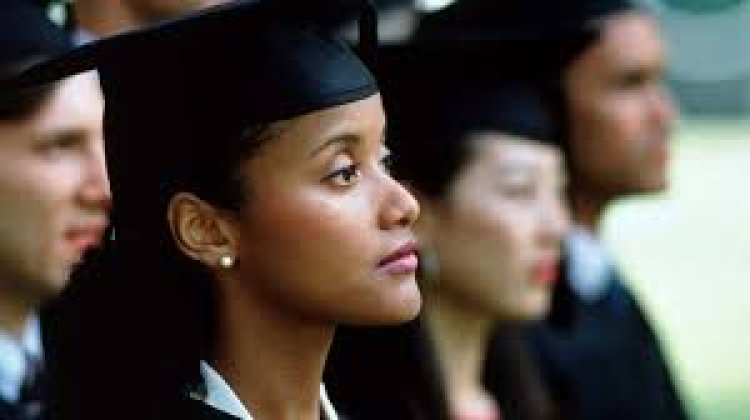
Latin America and the Caribbean recorded the highest share of private higher education enrollment at 49%.
This rise in private institutions reflects increasing demand for higher education, especially in countries where public universities cannot absorb growing student populations.
However, concerns remain over affordability and educational quality, particularly in regions where regulation is weak.
Despite the surge in enrollment, graduation rates have not improved at the same pace.The report also highlighted the struggles faced by refugees and forcibly displaced people.
Although refugee enrollment in higher education rose from 1% in 2019 to 9% in 2025, major barriers remain — especially around recognition of qualifications and missing academic documentation.
To address this, UNESCO has expanded its Qualifications Passport initiative in countries including Iraq, Kenya, Uganda, Zambia, and Zimbabwe.
The initiative helps displaced individuals validate their educational backgrounds and continue their studies or careers.As universities continue to expand, digital technologies and artificial intelligence are rapidly reshaping teaching and learning.Yet UNESCO warns that many institutions remain unprepared for the transformation.As of 2025, only one in five universities worldwide had a formal AI policy.The UNESCO report paints a picture of both progress and unfinished work.
Women’s rising participation in higher education represents one of the most significant educational shifts of the modern era. However, enrollment alone is not enough.
As higher education systems continue to grow, governments and institutions will need innovative policies and sustainable funding models to ensure that progress benefits everyone — regardless of gender, income level, or geography.
The global classroom is changing rapidly. The next challenge is making sure opportunity changes with it.