Educators Must Adapt to Emerging Technologies, Experts Charge at PATTEAN Conference
Educators Must Adapt to Emerging Technologies, Experts Charge at PATTEAN Conference
 UmarFarouk123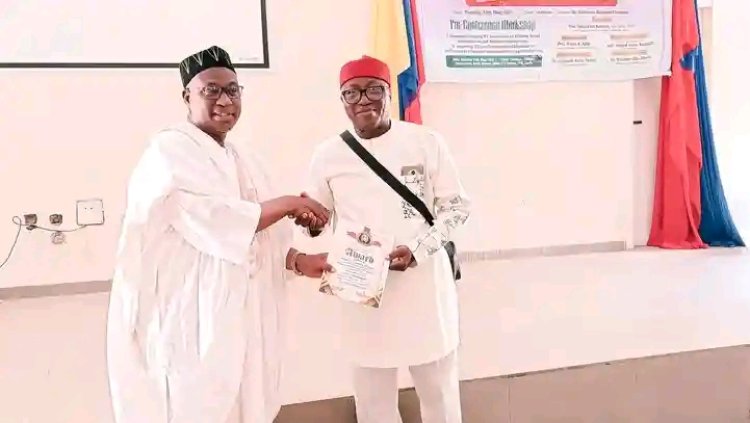
The Federal University of Education, Zaria, on Tuesday, 12 May 2026, hosted the 18th National Conference of the Primary and Tertiary Teacher Education Association of Nigeria (PATTEAN), themed “Digital Revolution in Expanding Access to Quality Education in Nigeria.”
Declaring the conference open on behalf of the Vice-Chancellor, Prof. Yahaya Isa Bunkure, the Deputy Vice-Chancellor, Prof. Suleiman Balarabe, described the theme as timely and significant, noting that technology has substantially reduced many of the challenges previously faced by both teachers and learners, particularly in accessing learning materials and meeting academic demands.
Prof. Balarabe explained that digital technologies have also simplified administrative processes and reduced teachers’ workloads in areas such as lesson planning, instructional delivery, research, and assessment, while simultaneously supporting students in assignments and academic research. He, however, cautioned that the use of artificial intelligence and other digital tools must be guided by ethical considerations and appropriate regulatory frameworks.
He further stressed that teachers must embrace information technology and other emerging digital tools to remain relevant and effectively engage with their students, warning that failure to adapt would continue to widen the gap between teachers and learners.
The Deputy Vice-Chancellor also encouraged participants, particularly scholars within the university, to contribute research papers to the conference theme, recalling that the institution had embraced digitalization long before its transition into a university.
Delivering the keynote address, the National President of PATTEAN and Dean of the Faculty of Education, University of Abuja, Prof. Hosea A. Apeh, noted that the association was established eighteen years ago at the Federal College of Education (Technical), Asaba.
Prof. Apeh observed that digitalisation in education offers significant benefits for persons with special needs, adding that many of the abstracts submitted for the conference focused on how digital technologies can enhance educational access and inclusion for such learners.
He expressed appreciation to the Federal University of Education, Zaria, for hosting the conference and for the warm reception accorded to participants.
Speaking as Chairman of the occasion, Dr. Mukhtar Ado Jibril of Capital City University, Kano, stated that rapid digital transformation across the global education landscape has fundamentally reshaped how knowledge is accessed, delivered, and acquired. According to him, technology is no longer a luxury in education but an indispensable tool for teaching, learning, research, administration, and lifelong learning.
Dr. Jibril further noted that despite challenges confronting Nigeria’s education sector—including inadequate infrastructure, shortage of qualified teachers, poor connectivity, unstable power supply, and digital inequality—innovations such as artificial intelligence, virtual learning platforms, and mobile technologies offer significant opportunities to bridge educational gaps and expand access to quality education in both urban and rural communities.
He urged participants not to allow conference deliberations to end within the conference hall, but to translate discussions and resolutions into actionable strategies, innovative pedagogies, and sustainable policies capable of transforming the nation’s education system and promoting digital inclusion.
Presenting the lead paper titled “Digital Revolution in Expanding Access to Quality Education in Nigeria,” Dr. Fadele Ayotunde Alaba of the Federal University of Education, Zaria, argued that the digital revolution—driven by technologies such as artificial intelligence, cloud computing, and e-learning platforms—has tremendous potential to transform education in Nigeria by making it more inclusive, accessible, and effective.
Dr. Fadele identified poor infrastructure, the urban-rural digital divide, low ICT literacy, and weak policy implementation as major challenges confronting digital education in the country. He stressed that meaningful progress would require deliberate investment in infrastructure, strong policy support, and sustained efforts to build the digital capacity of teachers. He concluded by emphasizing that Nigeria must urgently embrace emerging educational technologies to achieve inclusive and equitable education for all.
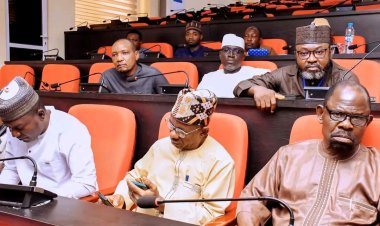
The opening ceremony of the four-day conference, held at the Prof. Suleiman Balarabe Chamber, was attended by the Acting Registrar, Mal. Shehu Iya Sa’idu, represented by the Establishment Secretary, Mal. A. A. Galadima; the Acting University Librarian, Mal. Tijjani Ahmed Abdul; the Director of Academic Planning, Mal. Haliru Musa; other directors, deans, heads of departments and units, as well as students and other participants.