KWASU Approves AI Policy, Warns Against Dangers of Bot-Driven Narratives
KWASU Approves AI Policy, Warns Against Dangers of Bot-Driven Narratives
 UmarFarouk123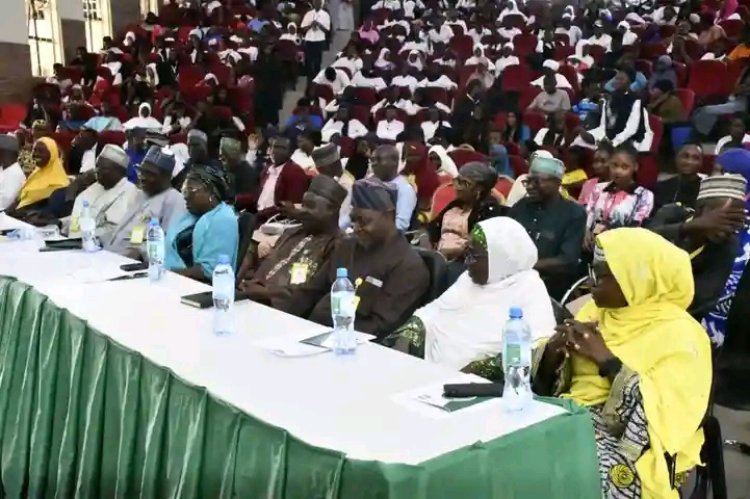
The Senate of Kwara State University (KWASU) has approved the institution’s policy on artificial intelligence for staff and students as part of efforts to promote ethical and responsible use of emerging technologies in education.
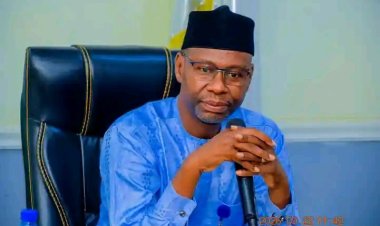
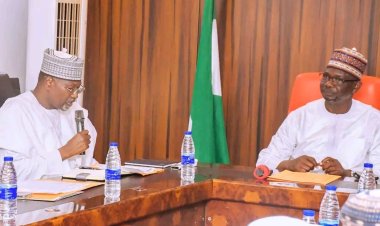
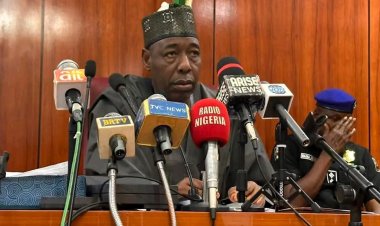
The Vice-Chancellor, Professor Shaykh-Luqman Jimoh, made this known this during the 2nd Faculty of Information and Communication Technology Lecture held on Wednesday, May 6, 2026.
Professor Jimoh said the policy initiative was inspired by the faculty’s previous lecture, which focused on balancing technological advancement with ethical considerations in the use of artificial intelligence in education.
Describing the present era as the age of “post-truth” where emotions, ethnic and regional sentiments increasingly shape public opinion, the Vice-Chancellor warned against the growing dangers of bot-driven narratives and generative AI content.
According to him, academics and technology experts have a responsibility to alert governments, lawmakers, and citizens to the threats posed by manipulated digital content to public health, social harmony, interfaith relations, and national security.
He also stressed the need for stronger digital literacy campaigns to help citizens identify AI-generated content and prevent the misuse of technology to undermine peaceful coexistence.
The faculty lecture titled “The Post-Truth Paradigm in the Global South: A Critical Appraisal of Media Trust and Credibility amidst Bot-Driven Narratives and Generative AI Challenges in Nigeria" was delivered by a professor of media history, Professor Umaru A. Pate, who noted that Nigeria and other countries in the Global South are highly vulnerable to misinformation fueled by bot networks and generative artificial intelligence.
He attributed this weakness to inefficient regulatory systems, low media literacy, linguistic diversity, and heavy dependence on social media on mobile devices.
To combat the wave of manipulated content on social media in the country, the media expert called for urgent collaboration among among government, academia, organisations, and technology companies to strengthen regulation, promote media literacy, and integrate AI and digital verification skills into academic curricula.
Earlier in his welcome address, the Dean Faculty of Information and Communication Technology, Professor Isiaka Zubair Aliagan noting that the Nigerian media space has become a complex arena for competing narratives, stating that the Faculty of ICT Lecture is structured to provide rigorous and sustained platform for critical scholarly engagement on themes that will shape and influence public opinion.