FUNAAB Equips Academic Staff with Bioinformatics Skills to Boost Global Research Ranking
FUNAAB Equips Academic Staff with Bioinformatics Skills to Boost Global Research Ranking
 UmarFarouk123
The Federal University of Agriculture, Abeokuta (FUNAAB) has underscored the critical role of bioinformatics in driving innovation and improving international academic rankings.
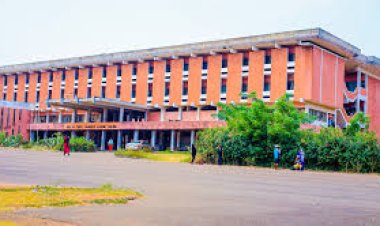
On February 4, 2026, the university hosted a One-Day Bioinformatics Training Programme for academic staff at the 250-Capacity Computer Laboratory. The workshop focused on empowering researchers with computational tools necessary for high-impact scientific discovery in the era of big data.
Representing the Vice-Chancellor, Prof. Babatunde Kehinde, the Deputy Vice-Chancellor (Academic), Prof. Olusegun Idowu, described the training as a timely intervention. He noted that proficiency in bioinformatics is no longer optional but "indispensable" for researchers in agriculture and health sciences aiming for global visibility.
Prof. Olusegun Folorunso, Director of the Directorate of Academic Information Systems (DACIS), emphasized that this second series of the workshop was specifically designed to:
Strengthen sustainable research skills among faculty members.
Promote international collaboration through shared scientific platforms.
Support early-career researchers in building professional networks.
The keynote facilitator, Dr. Adeyemi Adenaike, defined bioinformatics as the essential intersection of Biology, Computer Science, Mathematics, and Statistics. He highlighted that the modern "explosion of biological data" due to advanced sequencing technologies makes computational analysis the foundation of contemporary life sciences.
Key areas covered in the technical sessions included:
Genomics & Proteomics: Understanding molecular structures and functions.
Metagenomics: Studying microbial communities directly from their environments.
Data Validation: Ensuring sequence submission and analysis meet international standards for reproducible research.
By integrating these advanced tools into its research culture, FUNAAB aims to solidify its position as a leading research-intensive institution dedicated to achieving SDG 4 (Quality Education) and SDG 9 (Industry, Innovation, and Infrastructure).