FUTA Experts Examine AI's Impact on the Built Environment at Annual Lecture
The Federal University of Technology, Akure (FUTA) hosted its 12th annual lecture and first postgraduate research conference, where experts examined the impact of Artificial Intelligence (AI) on the built environment.
 Chris Oyeoku Okafor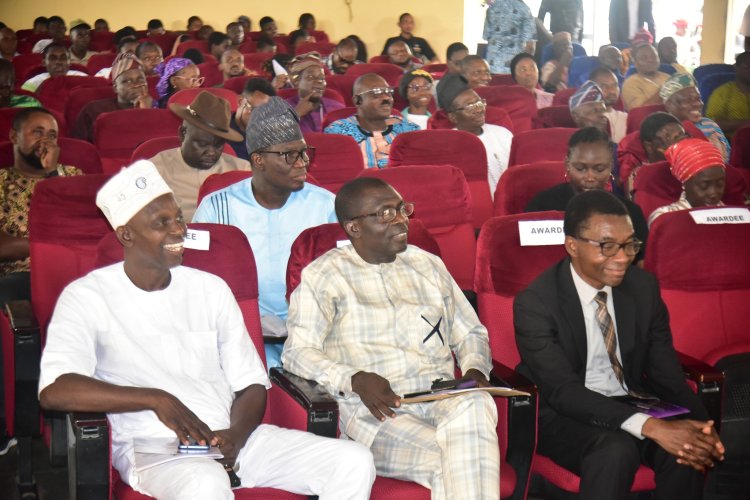
A Chartered and Registered Architect, Olusegun Ladega, has emphasized that the comprehensive application of Artificial Intelligence (AI) will significantly enhance the built environment and improve professional practices in the sector. He made this assertion at the 12th annual lecture and first postgraduate research conference of the School of Environmental Technology at the Federal University of Technology, Akure (FUTA), held on Wednesday, February 19, 2025.
Delivering a lecture on the topic, "Artificial Intelligence and the Built Environment Professions: What is Our Level of Involvement?" Ladega defined the built environment as the human-made surroundings where people live, work, and interact. These surroundings include buildings, infrastructure, public spaces, and transportation systems designed to support human activity.
Ladega, an expert in architectural design, construction contract administration, project management, facilities management, arbitration, and dispute resolution, described AI as the simulation of human intellect through algorithms, machine learning, and data-driven technologies. He highlighted that AI applications can be integrated into various aspects of the built environment, including architecture, surveying, urban planning, resource management, construction, engineering, robotics, and automation.
In architecture, Ladega noted that AI can enhance design assistance, test fitting, Autodesk applications, Building Information Modelling (BIM), 3D modeling and visualization, material optimization, and code compliance. In surveying, AI can be applied in automated cost estimation, document automation, drone-powered surveying, automated mapping, Geographic Information Systems (GIS), and real-time climate change monitoring.
For urban planning, AI-driven smart cities, disaster resilience, and resource planning can improve results. In engineering, AI applications such as predictive analysis, material optimization, structural strength monitoring, AI-powered electrical load forecasting, and automated clash detection can lead to more accurate outcomes.
While acknowledging AI's benefits, Ladega also highlighted potential challenges, including data availability and quality, data fragmentation, high implementation costs, the need for continuous learning and training, ethical considerations, and potential job displacement. To mitigate these challenges, he recommended incorporating AI into the built environment curriculum, encouraging research tailored to the Nigerian context, and fostering collaboration among academia, industry, and government. He also called for policy regulations to ensure ethical and responsible AI usage in the built environment.
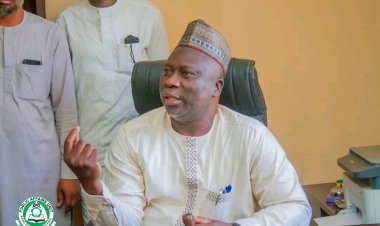
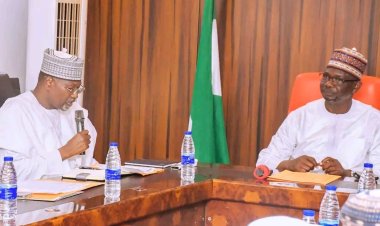
Speaking at the event, Vice Chancellor Professor Adenike Oladiji, represented by Deputy Vice Chancellor (Academic), Professor Taiwo Amos, commended the Dean of the School of Environmental Technology (SET), Professor Isaac Olaniyi Aje, for sustaining this important academic tradition. Professor Oladiji emphasized that as society evolves and adopts cutting-edge advancements in science and technology, the built environment must not be left behind. She noted that AI is no longer a futuristic concept but a present reality influencing various aspects of human life.
In his welcome address, Dean SET, Professor Olaniyi Aje, described the lecture's theme as timely and essential, highlighting its relevance in shaping policies, designing sustainable infrastructure, and fostering resilient communities. He noted that the 2025 annual lecture series was unique, as it recognized past leaders and senior professors who played pivotal roles in laying the foundation for the school.
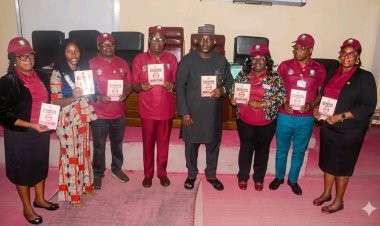
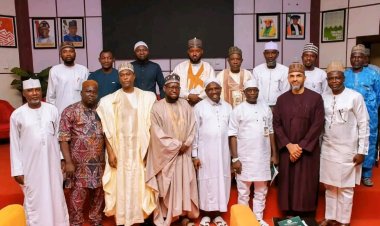
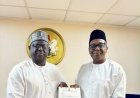
The event also featured the presentation of awards to distinguished individuals in the built environment sector. The awardees included the Managing Director of Interstate Architects, Arc. Olusegun Ladega; Deputy Vice Chancellor of Obafemi Awolowo University (OAU), Ile-Ife, Professor Olubola Babalola; conference sponsor and distinguished FUTA alumnus, Arc. Adesiji Akinwale; Principal of Sky-Blue Concepts, Lagos, Arc. Adenike Uanzekin; Bldr. Olugbade Omolade; former Dean SET, Professor David Olanrewaju; Professor Sunday Ogunduyile; former Deputy Vice Chancellor FUTA, Professor Deji Ogunsemi; Professor Julius Olujimi; Professor Bolaji Kashim; Dean, SEMS, Professor Olaniyi Aje; former Deputy Vice Chancellor (Academics), Professor Olatunde Arayela; and former Deputy Vice Chancellor (Development), Professor Tolulope Akinbogun, among others.
The lecture provided an insightful discourse on AI's role in revolutionizing the built environment, reinforcing the need for continuous research, policy development, and industry collaboration to maximize AI's potential in the sector.