Inside Nigeria’s University Crisis: ASUU Raises Fresh Concerns Over 2025 FG Agreement
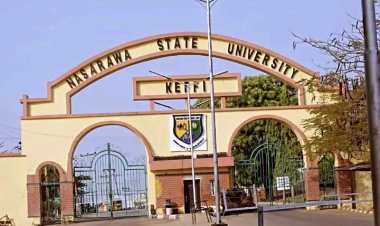
ASUU has accused the Federal Government of failing to fully implement the 2025 agreement reached with the union, five months after it was signed. Speaking at a press conference in Nasarawa State University, Keffi, the union’s Abuja Zonal Coordinator, Dr. Adamu Al-Abdullahi, said the government’s claim of full implementation does not reflect conditions in public universities.
 judithhh

The Academic Staff Union of Universities (ASUU) has raised new concerns over the state of the 2025 agreement reached with the Federal Government, alleging that key provisions remain unimplemented five months after it was signed.
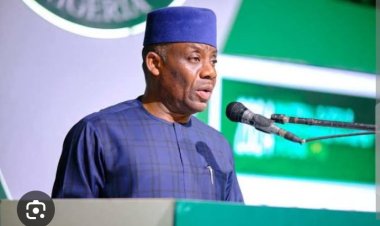
Speaking at a press conference on Monday at Nasarawa State University, Keffi, ASUU’s Abuja Zonal Coordinator, Dr. Adamu Al-Abdullahi, dismissed claims by the Minister of Education, Dr. Tunji Alausa, that the agreement had been fully executed. According to him, the situation in federal universities tells a different story.
He said lecturers are still contending with unpaid entitlements, salary discrepancies, pension-related challenges, and other unresolved welfare issues that continue to strain the academic workforce. “Implementation Exists Only on Paper”
Al-Abdullahi described the signing of the agreement as a long-awaited milestone after years of negotiations, but argued that implementation has not matched the commitments made by the government.
“It is exactly five months since the fanfare that accompanied the signing of the FG/ASUU Agreement after a protracted negotiation spanning eight years. However, the claim that the FG has fully implemented the agreement is far from the realities on ground in federal universities,” he said.
He further alleged that the Federal Government failed to set up the Implementation Monitoring Committee agreed upon during negotiations, a body meant to ensure coordinated and uniform execution across institutions.
According to him, this gap has led to universities interpreting and applying the agreement independently, resulting in inconsistencies.
“The FG has left it to individual universities to implement in a distorted and uncoordinated manner,” he stated.
Allegations of Selective Implementation
ASUU also accused some university managements of selectively implementing approved allowances. These include the Consolidated Academic Tools Allowance, Earned Academic Allowance, and Professorial Allowance.
The union argued that partial or inconsistent payment of these entitlements undermines the purpose of the agreement and worsens existing tensions within the university system.
Unresolved Financial and Welfare Issues
The union listed several outstanding issues it says remain unresolved, including:
- Arrears of the 25–35% salary award
- Promotion arrears
- Withheld salaries linked to the 2022 strike action
- Unpaid pension contributions
-Unremitted third-party deductions
ASUU maintained that these financial concerns continue to affect morale and productivity among lecturers across federal and state institutions.
The union also criticised the Federal Government’s enforcement of the “No Work, No Pay” policy during the 2022 industrial action, describing it as unfair.
Al-Abdullahi argued that academic work extends beyond physical classroom presence, noting that lecturers continued research and community engagement during the strike period.
“Withholding salaries of university lecturers on account of ‘no work, no pay’ is like reducing scholars to menial workers whose livelihood is anchored in physical appearances at their worksite,” he said.
Concerns Over Pension and University Administration
Beyond salaries and allowances, ASUU also raised concerns about delays in pension harmonisation for retired academics. It alleged that some state universities still lack functional pension schemes, leaving retirees in precarious conditions.
The union further criticised what it described as irregularities in academic appointments, particularly the introduction of roles such as “Professor of Practice” and “Diaspora Professors.”
According to ASUU, some of these appointments may have bypassed established approval processes involving university senates and governing councils.
The union warned that such practices risk weakening academic standards and opening the door to questionable credentialing within the university system.
The 2025 FG/ASUU agreement was expected to ease long-standing tensions in Nigeria’s public university system, following years of disputes over funding, welfare, earned allowances, and infrastructure.
However, ASUU’s latest position suggests that key disagreements remain unresolved, raising fresh questions about the stability of the agreement and the future of academic labour relations in the country.