Federal Education Colleges Now Award degrees And NEC Together- Minister of Education
Nigeria’s education sector is undergoing a major transformation as most federal colleges of education now operate a dual-mandate system that allows students to earn both the Nigeria Certificate in Education (NCE) and a Bachelor of Education (B.Ed.) degree. The Minister of Education, Tunji Alausa, said the initiative was introduced in 2025 to improve teacher training, increase enrolment, and ensure the sustainability of colleges of education. Under the programme, students begin with a three-year NCE course and, if they meet university admission requirements such as five O’level credits, continue for an additional two years to obtain a B.Ed. degree.
 judithhh

Nigeria’s teacher education system is undergoing a major transformation as federal colleges of education across the country begin offering a dual-mandate programme.
The Minister of Education, Tunji Alausa, revealed this development during an interview on Channels Television’s , describing the initiative as a strategic reform aimed at improving teacher quality, boosting enrolment, and securing the future of colleges of education in Nigeria.
For decades, colleges of education in Nigeria primarily awarded the NCE qualification, which remains the minimum teaching requirement in many basic education institutions. However, declining enrolment and increasing competition from universities created concerns about the long-term relevance of these colleges.
To address this, the Federal Government introduced the dual-mandate system in 2025, allowing federal colleges of education to award both NCE and degree qualifications.
According to Alausa, most federal colleges of education already operate under this model, except institutions established within the last five years.
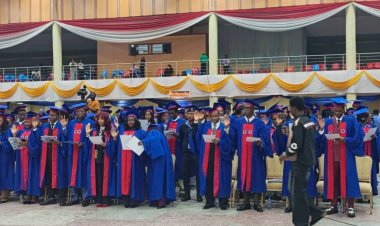
Under the arrangement, students begin with the traditional three-year NCE programme. After completing it, those who meet university admission requirements — particularly obtaining five O’level credits — can proceed directly into a two-year degree programme.
At the end of five years, successful students graduate with two qualifications:
- A Nigeria Certificate in Education (NCE)
-A Bachelor of Education (B.Ed.) degree
The minister described the initiative as a major milestone in strengthening Nigeria’s teacher training system.
The dual-certification model is expected to significantly improve access to higher education while also addressing the shortage of qualified teachers in the country.

Alausa explained that the reform has already increased student interest in colleges of education and positioned the institutions for long-term sustainability.
Nigeria has consistently faced concerns about the quality and quantity of teachers, particularly in public schools. By enabling students to earn both professional teaching certification and a university degree within a structured pathway, the government hopes to attract more young people into the teaching profession.
The minister noted that the approach mirrors the academic progression commonly seen in polytechnics, where students move from National Diploma (ND) programmes to Higher National Diploma (HND) or university degree pathways.
According to the minister, about 28 federal colleges of education have already commenced implementation of the dual-mandate programme. State-owned colleges of education are also preparing to adopt the system, although implementation depends on amendments to state laws governing their institutions.
Alausa disclosed that roughly 17 to 18 states have already taken legislative steps to enable the transition, with full implementation expected to begin from the 2026 academic session.
This expansion could dramatically reshape teacher education nationwide, creating a more unified and attractive pathway for aspiring educators.
What Happens If Students Don’t Meet Degree Requirements?
The minister clarified that progression into the degree phase is not automatic.
Students who complete the NCE programme but fail to meet the required O’level qualifications for university admission will graduate with only the NCE certificate and will not proceed to the B.Ed. programme.
While this maintains academic standards, it also preserves the value of the NCE qualification for those unable to continue.
The introduction of the dual-mandate system may prove to be one of the most significant reforms in Nigeria’s education sector in recent years.
Beyond increasing enrolment, the policy aims to elevate the status of colleges of education, produce better-trained teachers, and expand opportunities for students seeking professional and academic advancement simultaneously.
As more states prepare to adopt the model, the coming years could mark a turning point in how teachers are trained and qualified across Nigeria.